
1. The ₹1 crore illusion
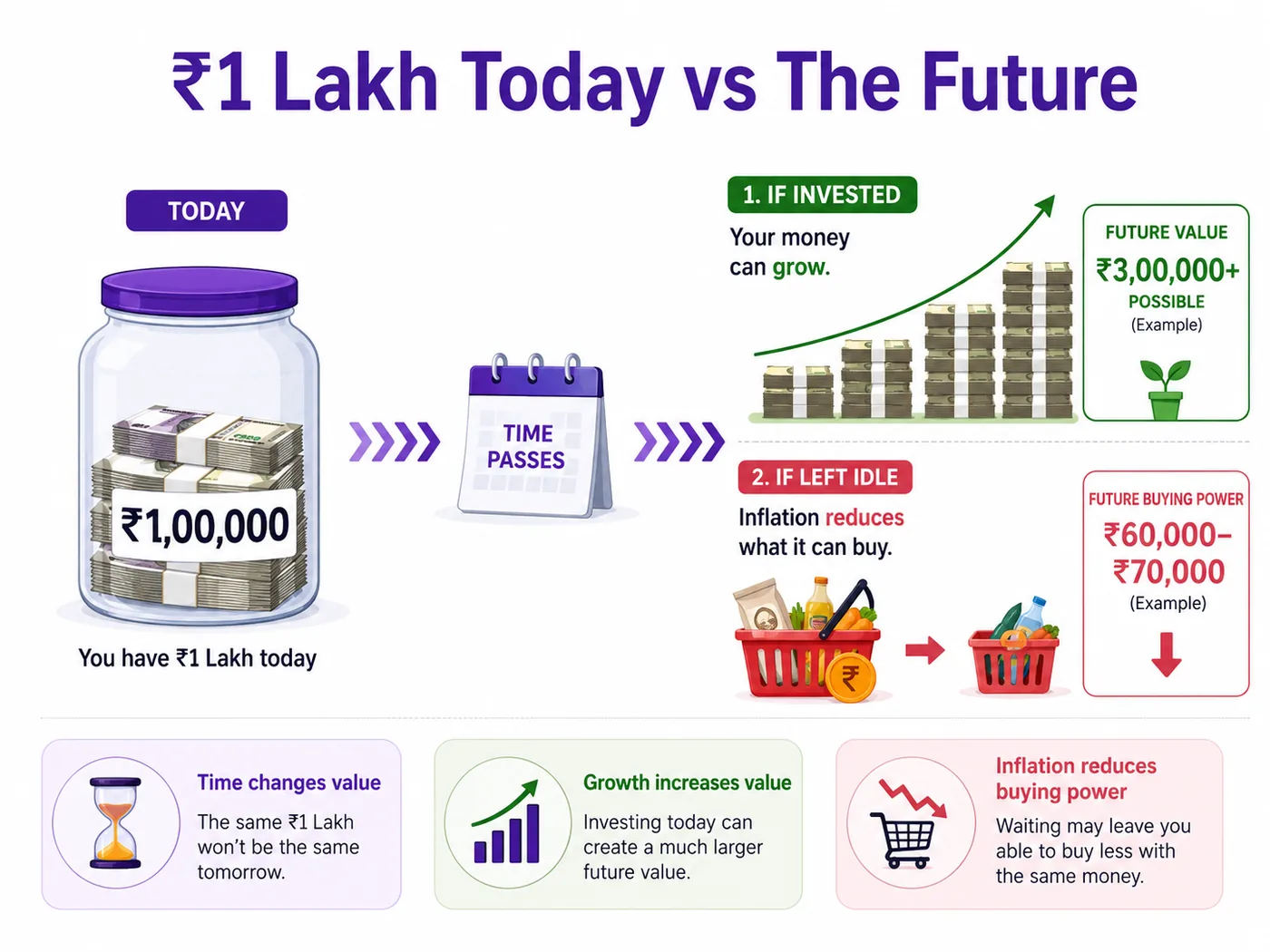
Imagine someone tells you, “You will have ₹1 crore after 30 years.” That sounds huge because your brain compares that future ₹1 crore with what ₹1 crore can buy today.
But inflation changes the comparison. If prices rise over the years, ₹1 crore in the future will not buy what ₹1 crore buys today.
2. Your goal may stay the same: its price may not
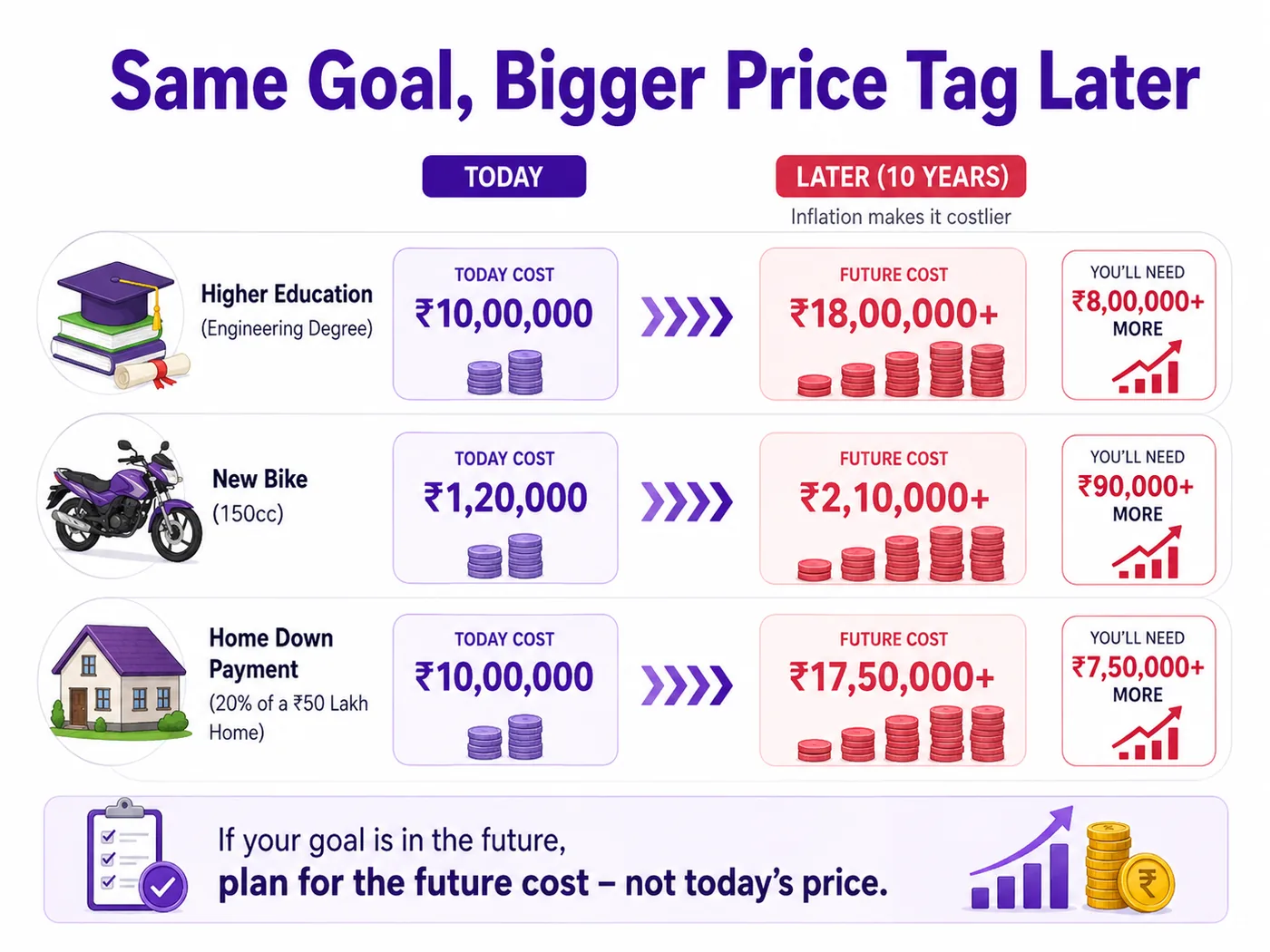
Suppose a major goal costs ₹25 lakh today. If its cost rises at 6% a year, the same goal could cost roughly ₹44.8 lakh after 10 years, ₹80.2 lakh after 20 years and ₹1.44 crore after 30 years.
This is why saying “I want ₹25 lakh for my child's education” is incomplete unless you also say when you need it.
3. Nominal money vs real purchasing power
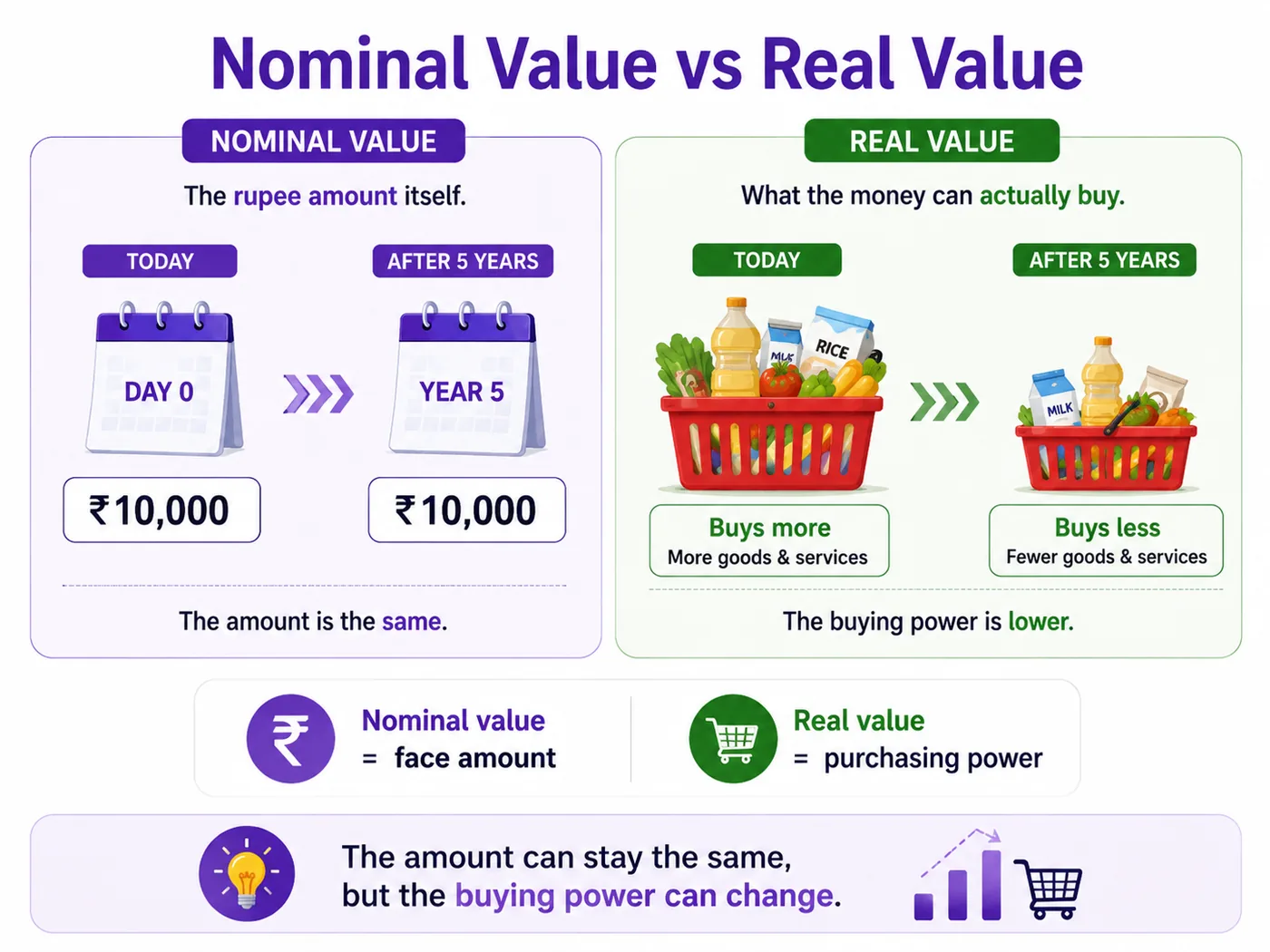
Nominal value is the rupee number you see. Real value is what those rupees can actually buy after accounting for inflation.
This distinction also matters for investment returns. If an investment grows 8% while inflation is around 6%, your purchasing power is not growing by the full 8%. Your real growth is only around 2%.
The percentage your investment statement reports before adjusting for inflation.
The growth in your actual purchasing power after inflation is considered.
4. How to plan a future financial goal
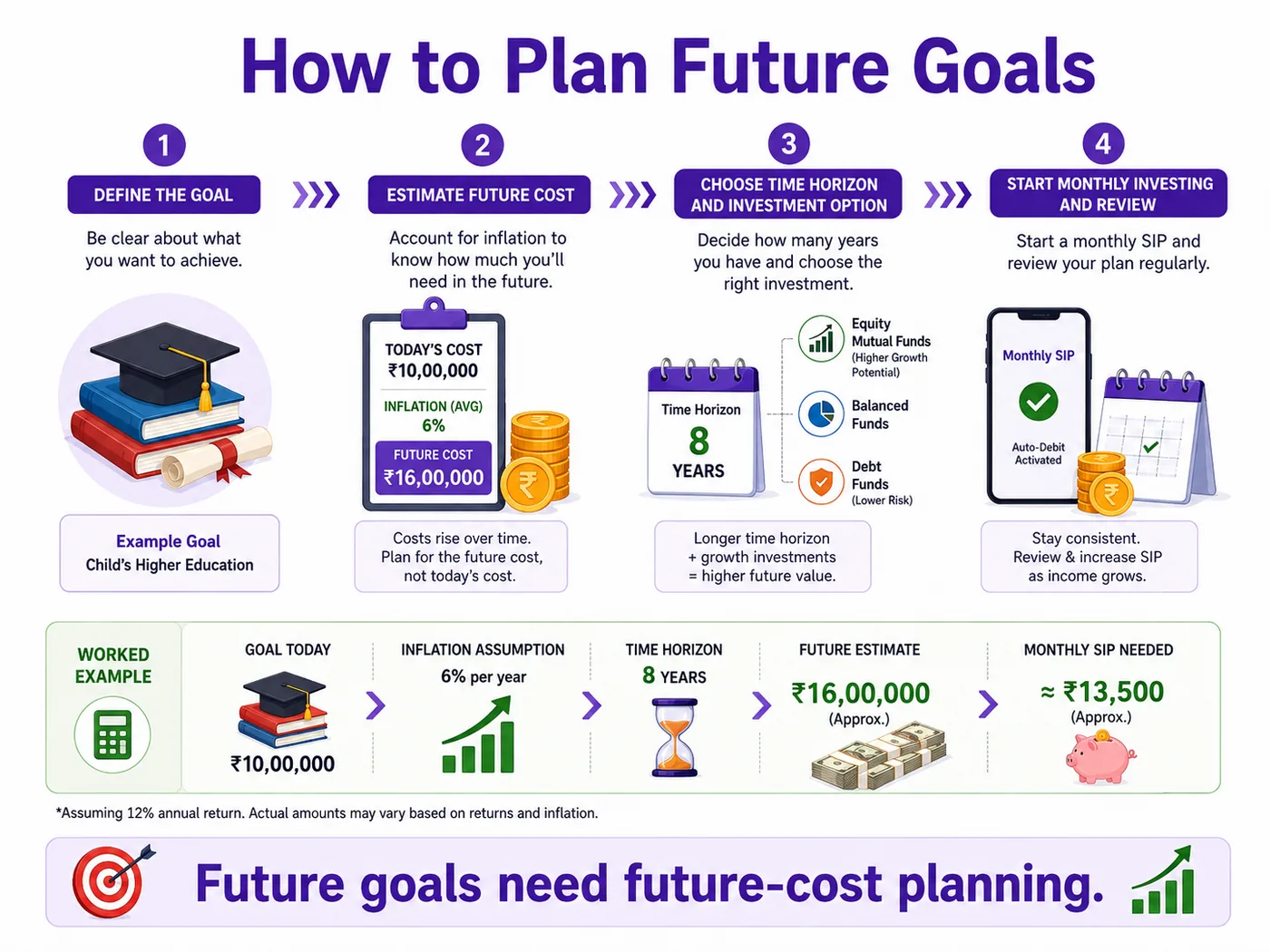
Start with what the goal would cost today. Then estimate how long you have and choose a sensible inflation assumption for that specific goal. This gives you an estimated future cost.
Only after estimating the future cost should you calculate how much you need to save or invest regularly.
5. Quick check
A goal costs ₹25 lakh today and is many years away. Which is the better way to plan?