
1. A bank is more than a place that stores money
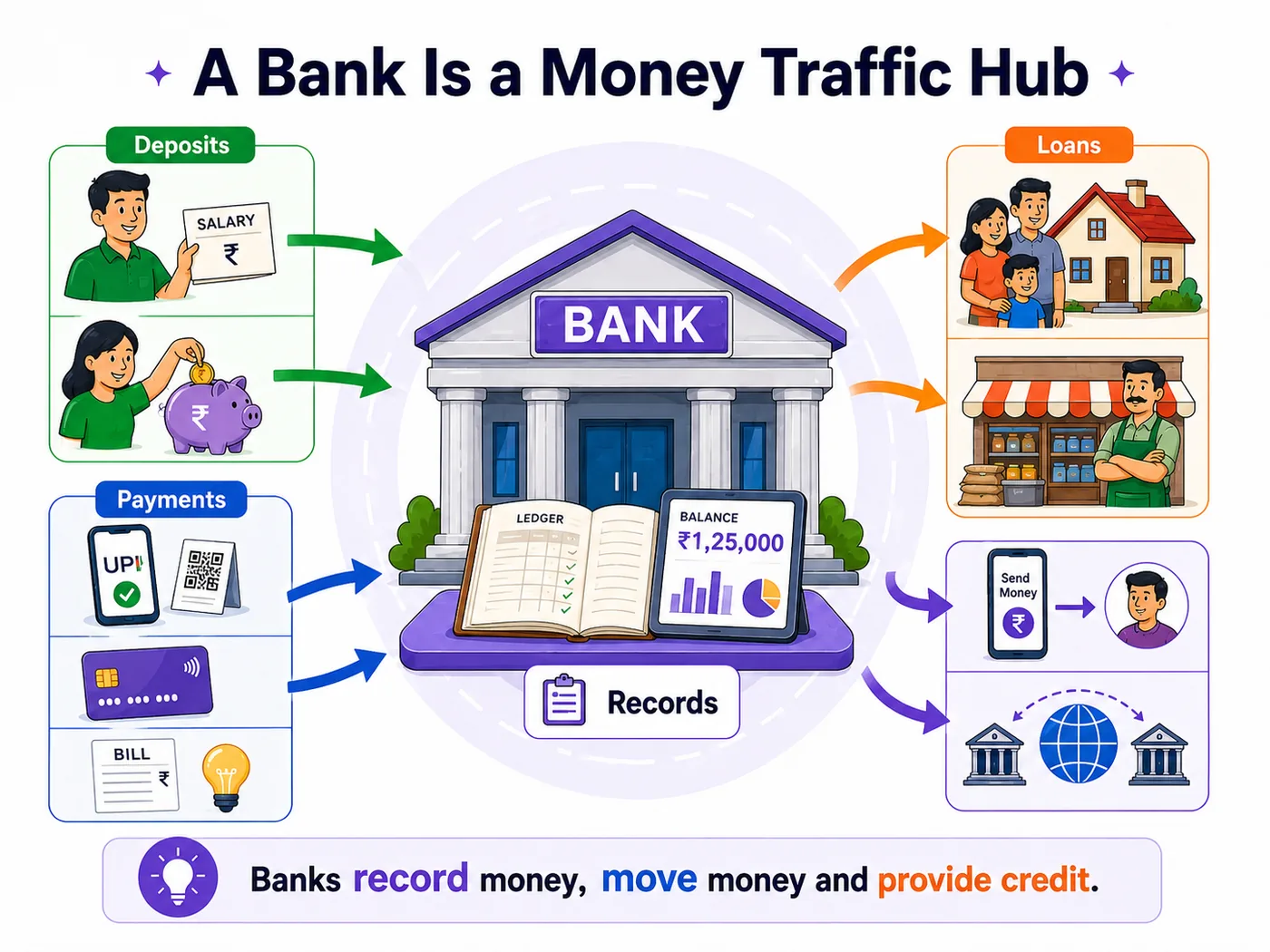
When most people think of a bank, they imagine a safe place where money is kept. That is only part of the story.
A modern bank mainly does three things: it records deposits, helps move money through payments, and provides credit to people and businesses that qualify to borrow.
2. Your bank balance is a record of what the bank owes you
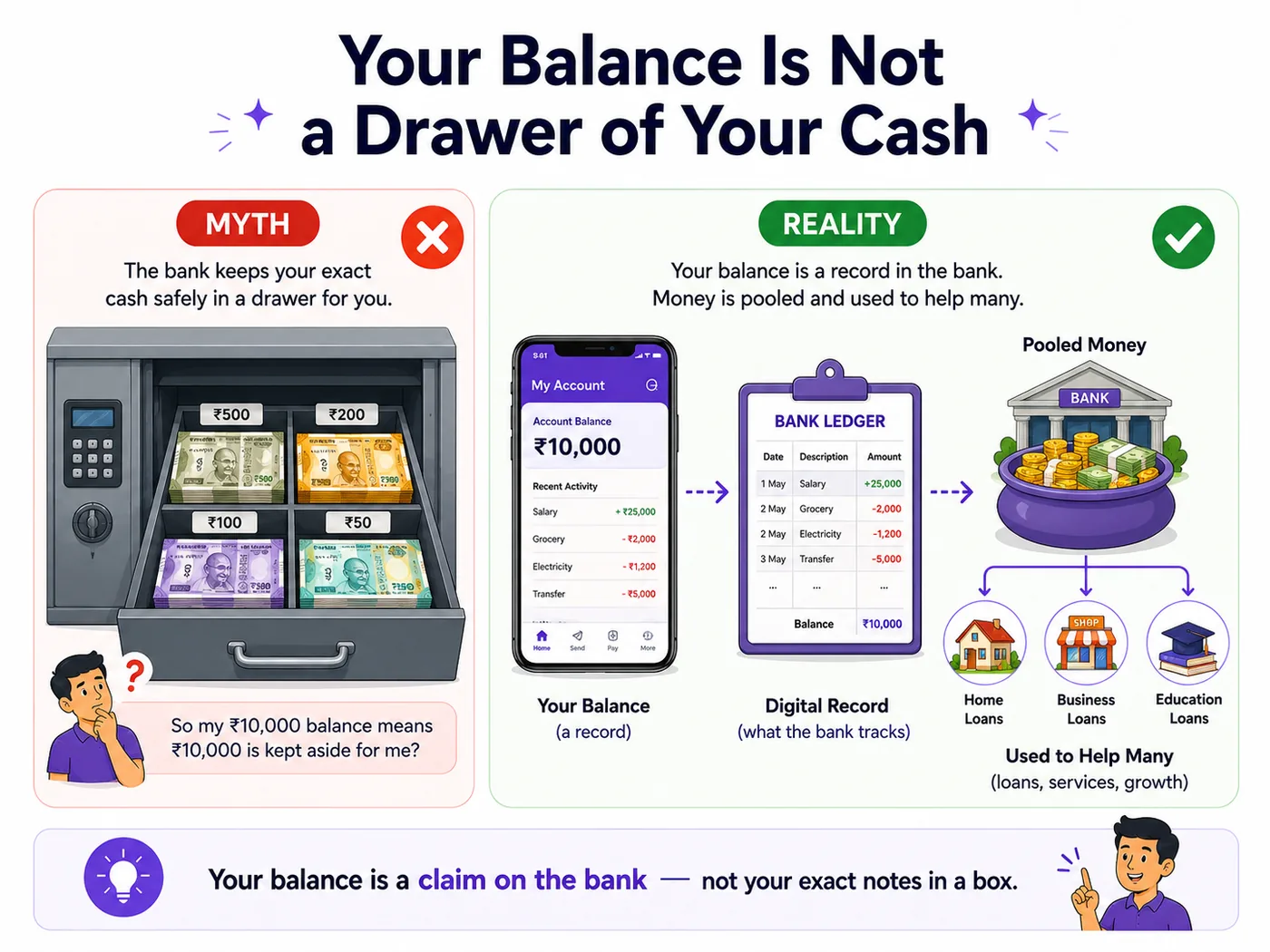
If your savings account shows ₹50,000, that does not usually mean there is a separate envelope inside the bank containing your exact ₹50,000.
Your balance is an accounting record. From your point of view, it is money you own. From the bank's point of view, it is an amount the bank owes you and must make available according to the terms of your account.
3. Your asset can be the bank's liability
This is one of the most useful ideas for understanding banking.
Your deposit is your asset because the bank owes that money to you. But on the bank's balance sheet, the same deposit is a liability.
A loan works in the opposite direction. If the bank gives you a loan, it becomes your liability because you must repay it. For the bank, the loan is an asset because the bank expects future repayments.
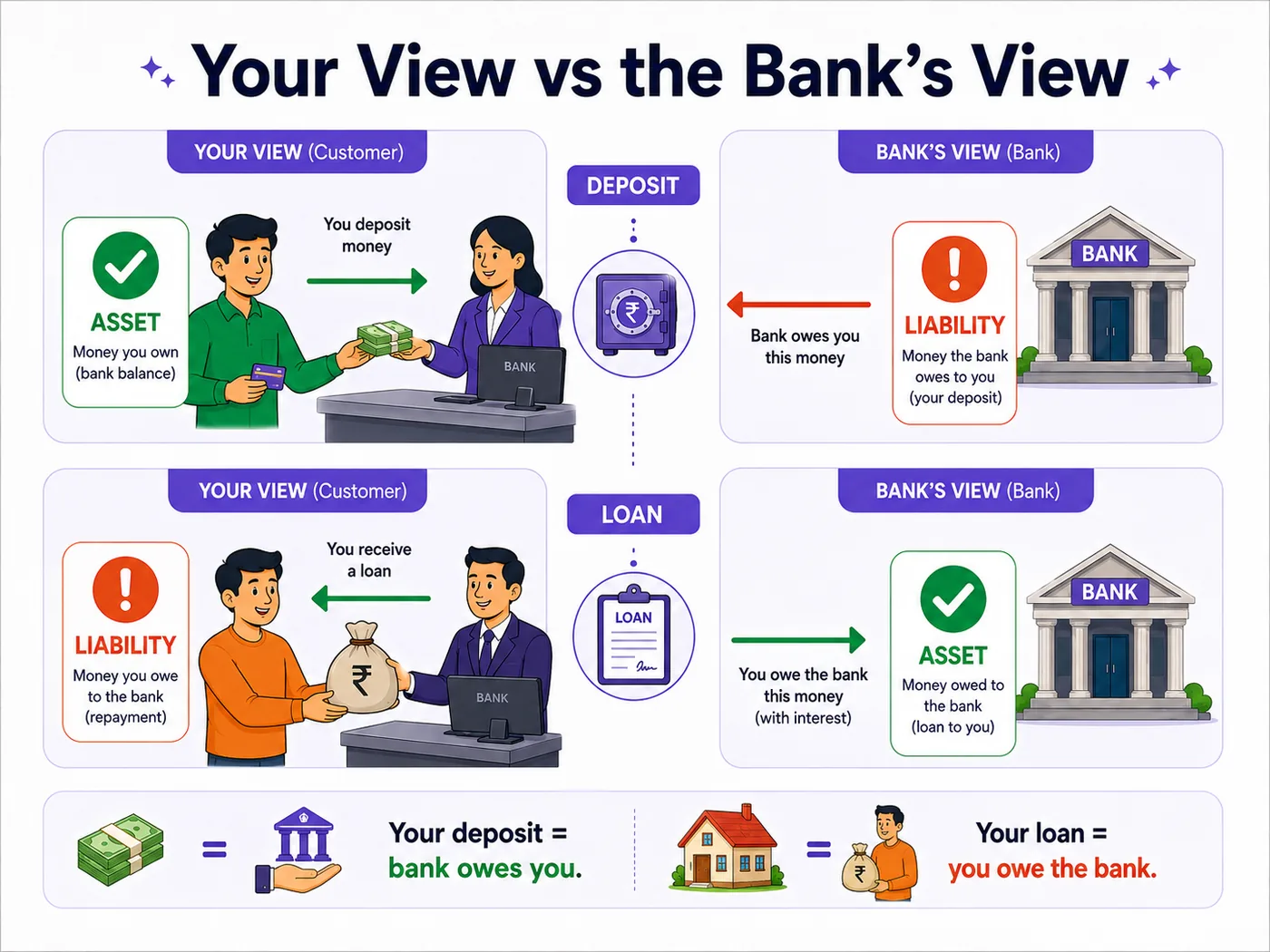
Your asset → bank's liability.
Your liability → bank's asset.
4. Why banks cannot simply lend everything
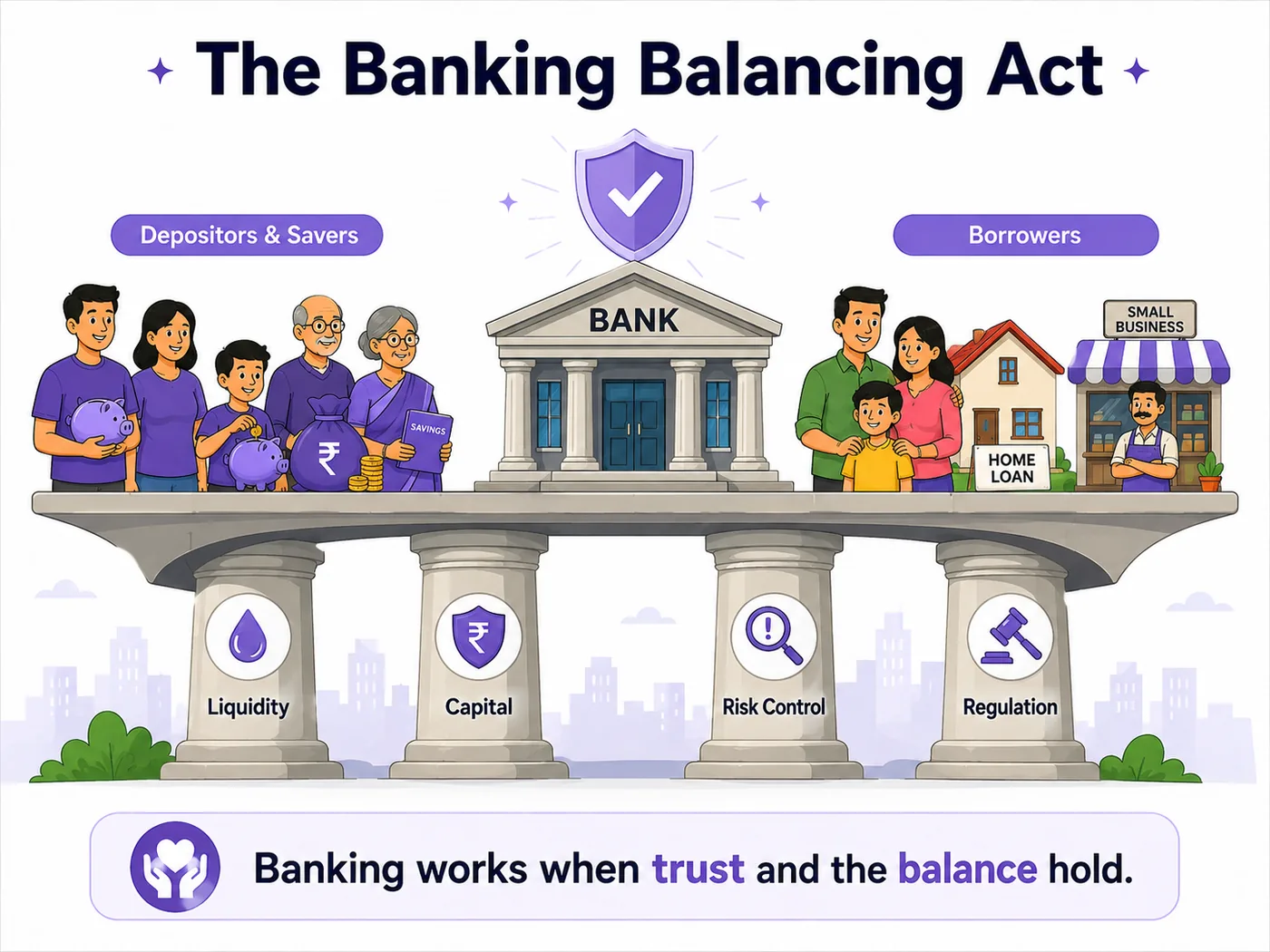
Customers expect to make payments and withdraw money when needed. At the same time, many loans last for months or years. Banks therefore have to carefully balance short-term access to money with long-term lending.
That is why banks manage liquidity, maintain capital, control credit and market risks, and operate under regulatory supervision.
5. Quick check
You have ₹1 lakh in a savings account. From the bank's accounting point of view, what is that deposit?