
1. What happens the moment money enters your account?
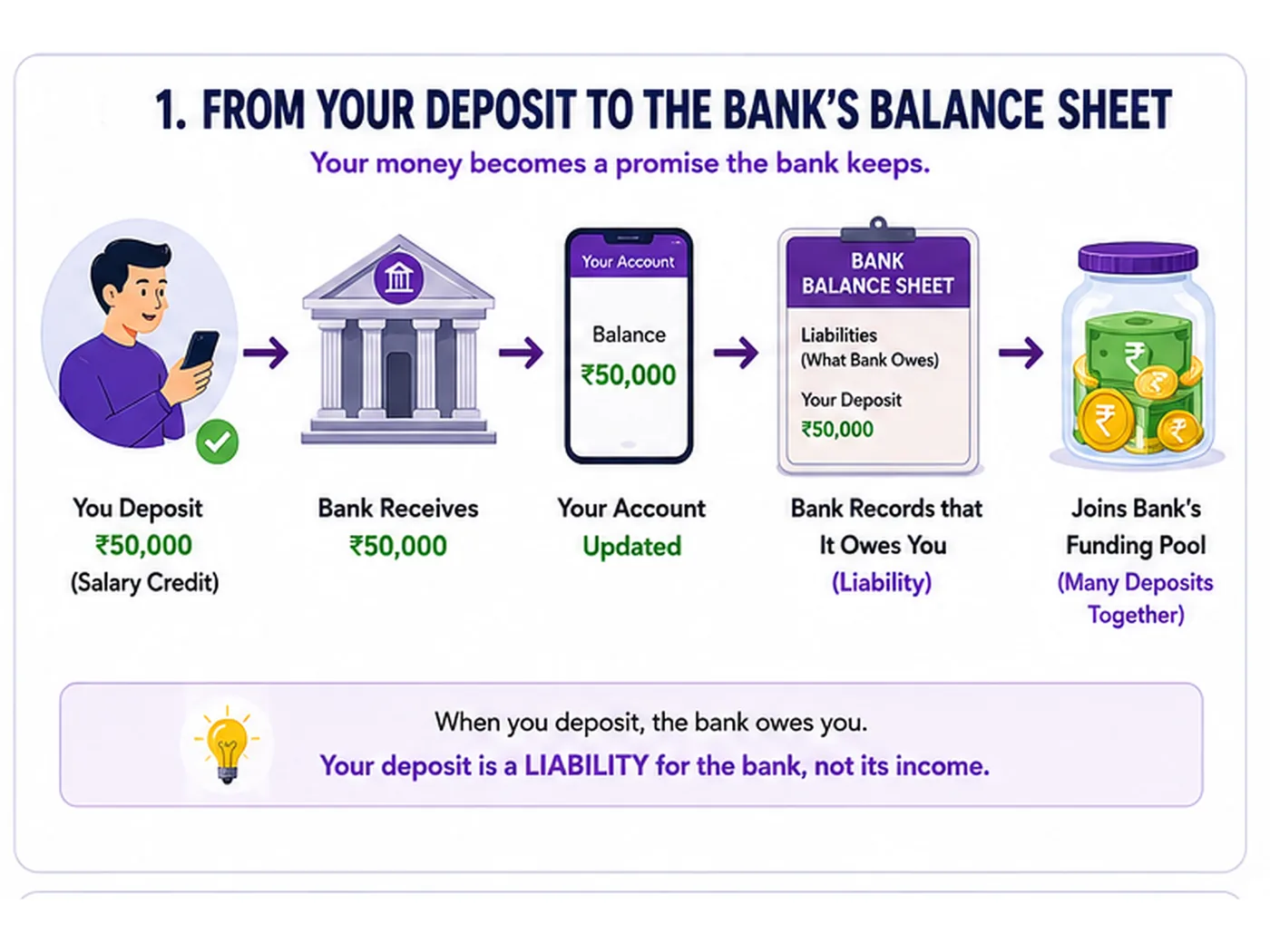
Suppose ₹50,000 reaches your savings account. The first thing the bank does is update its records so your account shows ₹50,000 available to you.
From your point of view, that balance is an asset. From the bank's point of view, it is a liability: an amount the bank owes you.
Your deposit then becomes part of the bank's overall funding and balance sheet. It is not normally placed in a separate box with your name on it.
2. What does the bank do with its funding?
A bank has to balance several needs at once. It must keep enough liquidity to honour payments and withdrawals, provide loans to suitable borrowers, hold financial assets, and settle payments with the rest of the banking system.
It also has operating costs, other sources of funding, and capital provided by shareholders. So there is no simple one-to-one mapping between your deposit and one loan.

3. What happens when you transfer the money?
If you transfer money to someone at the same bank, the bank can largely handle the payment by reducing your recorded balance and increasing the recipient's recorded balance.
If the recipient uses another bank, both banks must update their customer records and the transfer must also be settled between the banks through the payment and banking infrastructure.
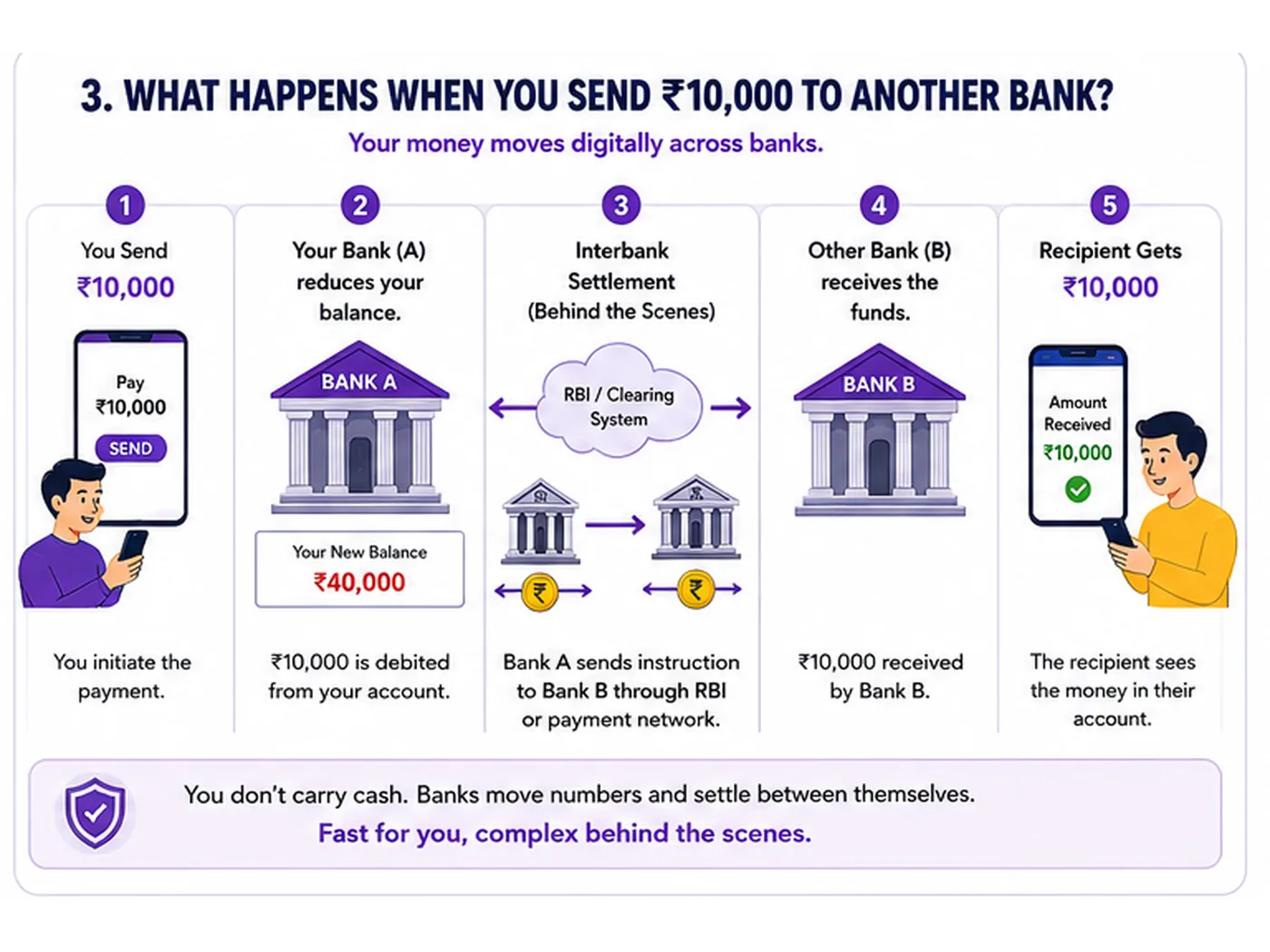
Mainly an internal change in the bank's own ledger.
Customer balances change and the banks also have to settle with each other.
4. Does a bank simply lend out your deposit?
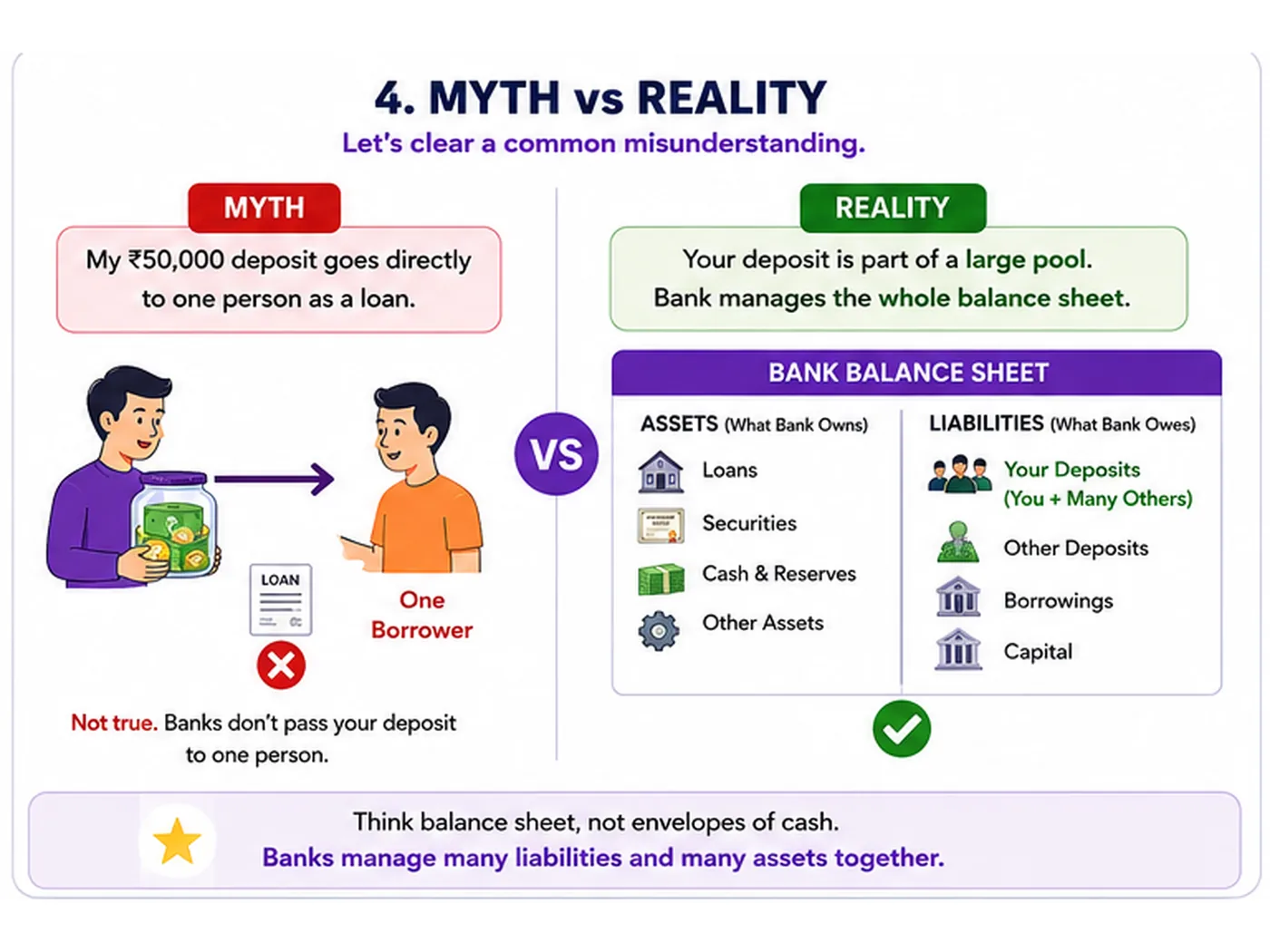
That sentence is useful as a first introduction, but it becomes misleading if taken literally.
Deposits are an important source of bank funding. Loans are assets on the bank's balance sheet. But modern bank lending is not simply “take ₹50,000 from Bala's deposit and give the same ₹50,000 to Ravi.”
When a bank makes a new loan, it can also create a new deposit in the borrower's account. What constrains the bank is its overall ability to fund itself, maintain liquidity and capital, manage risk, comply with regulation, and find creditworthy borrowers.
5. Quick check
You deposit ₹50,000. Which statement is the most accurate?