
1. What does cash flow actually mean?
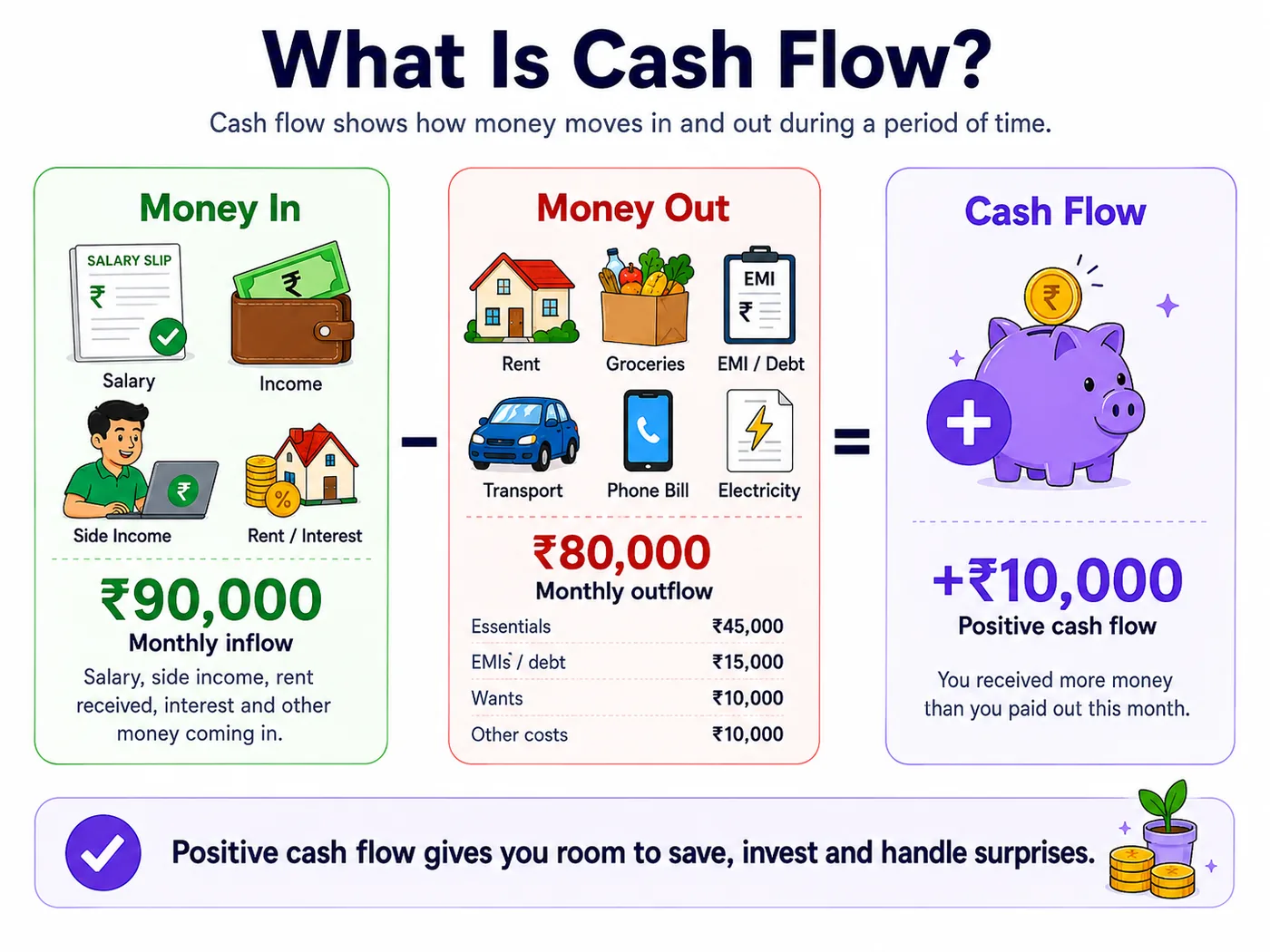
Cash flow is the movement of money into and out of your financial life during a period such as a week or month.
The basic calculation is simple: Cash Flow = Money In − Money Out. If ₹90,000 enters during a month and ₹80,000 leaves, your monthly cash flow is +₹10,000.
2. Positive, zero and negative cash flow
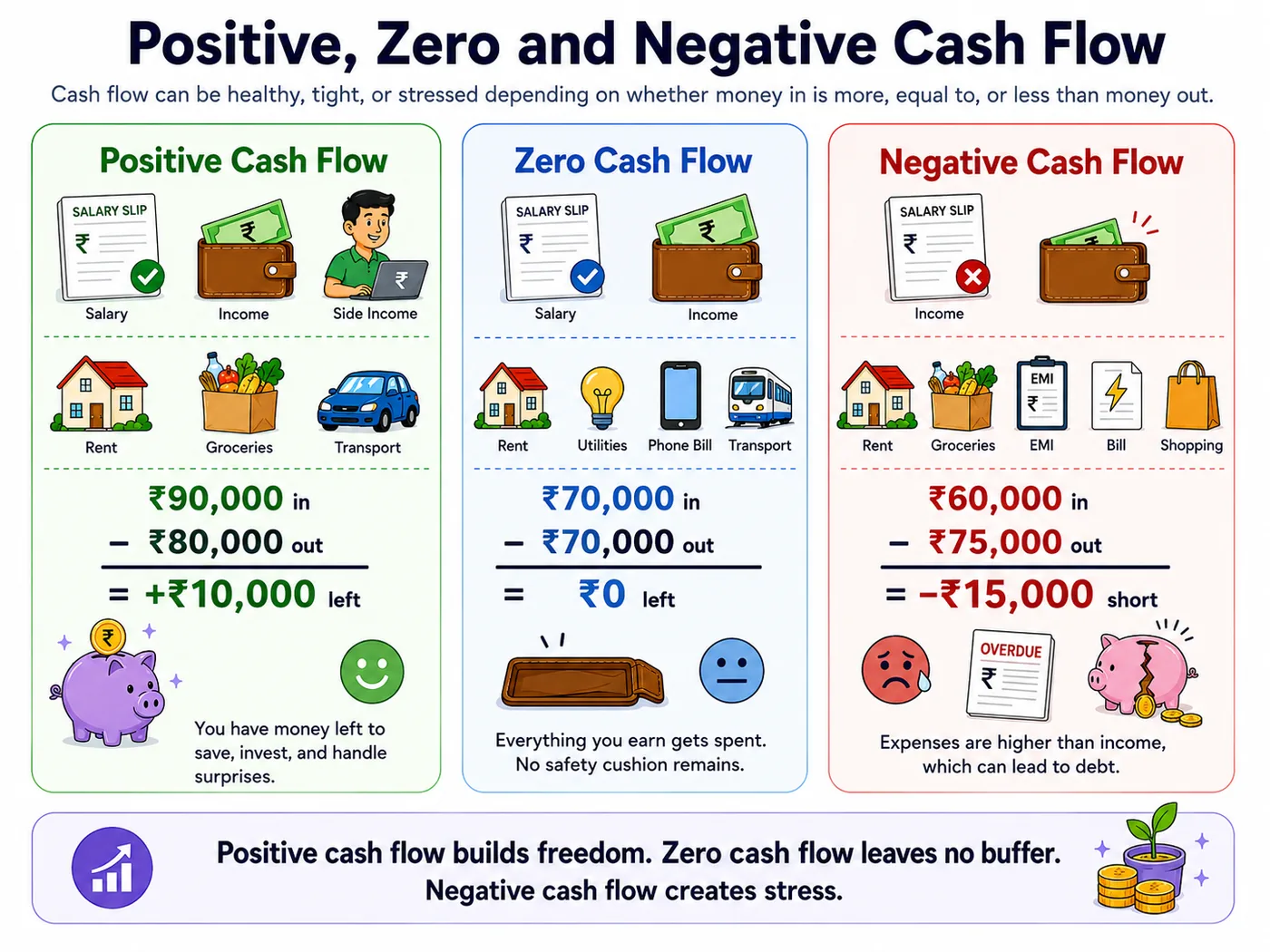
Positive cash flow means more money came in than went out. Zero cash flow means everything that came in was used. Negative cash flow means you paid out more than you received.
A single negative month is not automatically dangerous: annual insurance, a repair or a planned vacation can temporarily push a month negative. The concern is when negative cash flow becomes a repeated pattern and you rely on debt to fill the gap.
3. Why a high income can still feel broke
A higher salary helps, but your financial flexibility depends on the gap between inflow and outflow. Someone earning ₹1.5 lakh and spending ₹1.47 lakh has only ₹3,000 of monthly breathing room.
Another person earning ₹80,000 but spending ₹60,000 has ₹20,000 left. Their salary is lower, yet their cash flow is much healthier.

4. How do you improve cash flow?
There are only two broad directions: increase money coming in or reduce money going out. In real life, the best result usually comes from several small changes rather than one extreme cut.
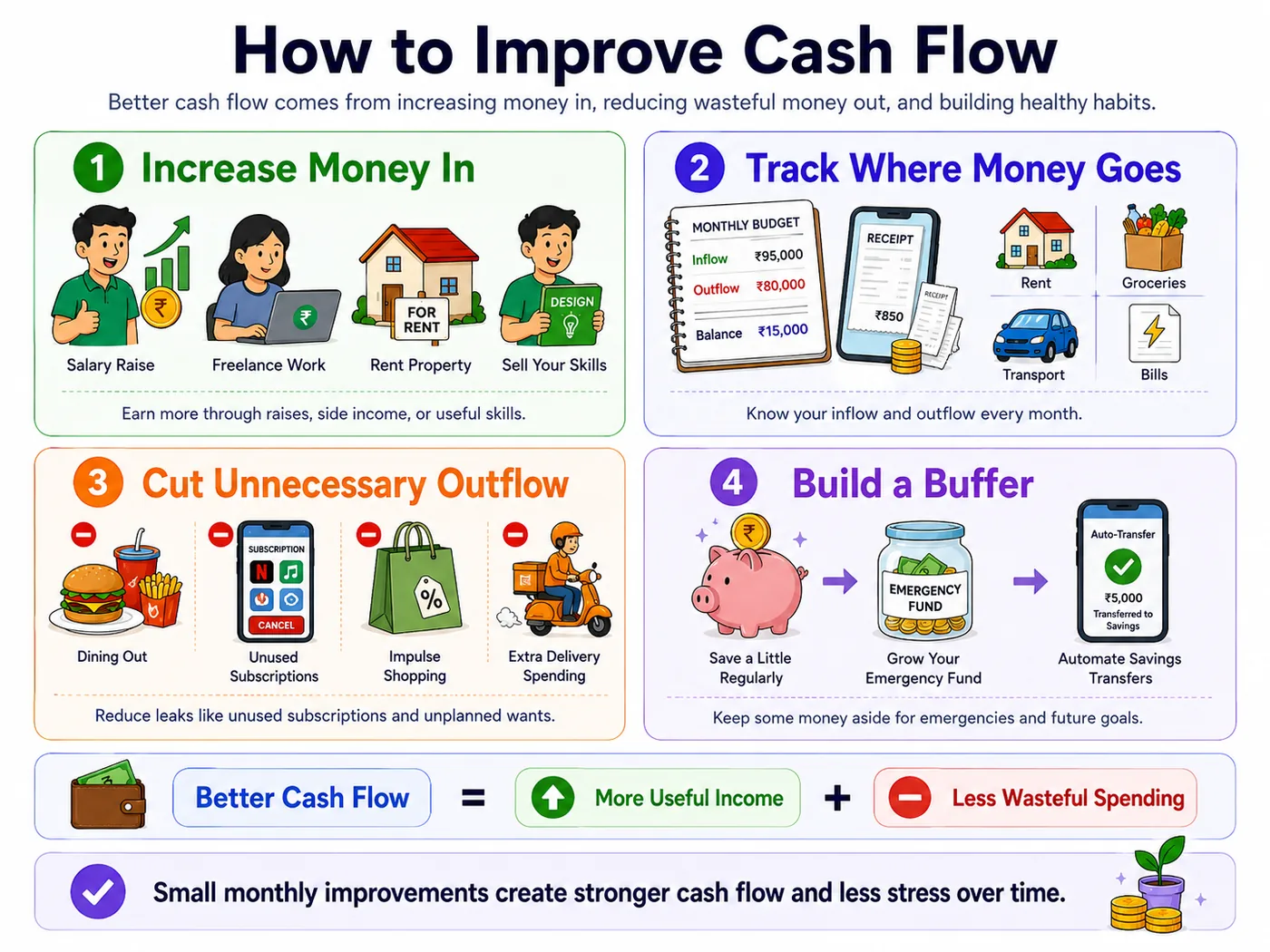
An annual ₹24,000 insurance premium is effectively ₹2,000 per month. Keeping ₹2,000 aside each month prevents the payment month from becoming a surprise.
Large EMIs and recurring subscriptions reduce flexibility because they consume cash before you make any new decision that month.
5. Quick check
You receive ₹75,000 this month. Your total outflow is ₹68,000. What is your cash flow?