
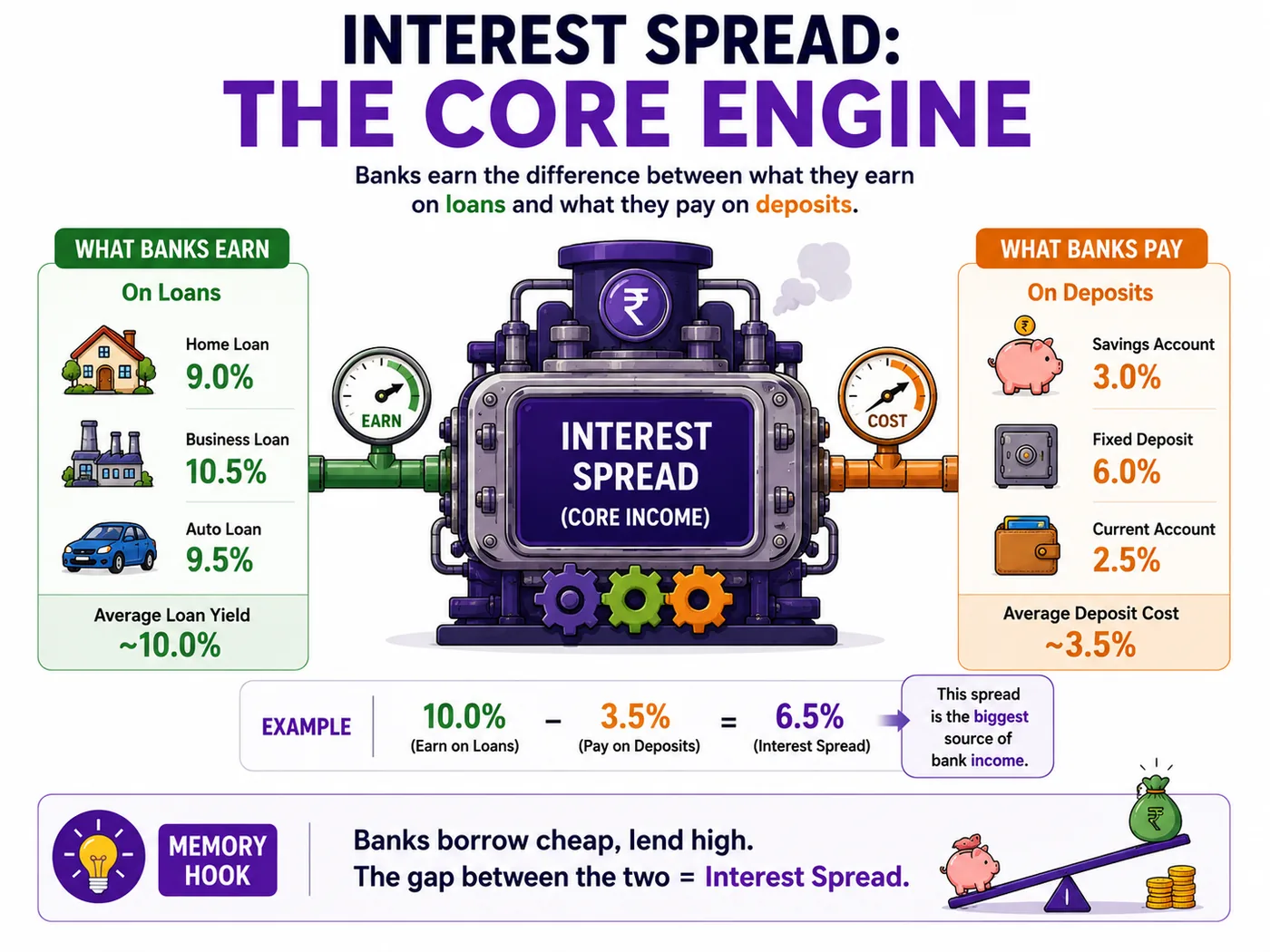
1. The core engine: interest income
Banks raise funding from deposits and other sources, and they use their balance sheet to hold earning assets such as loans and securities.
They may pay interest on some of their funding and receive interest from loans and other interest-earning assets. The difference between interest earned and interest paid is called net interest income.
2. Banks can also earn fees and service income
Not all bank revenue comes from interest. Banks may earn non-interest income from selected services such as payment processing, cards, account services, trade finance, foreign exchange, cash management, distribution commissions and other banking services.

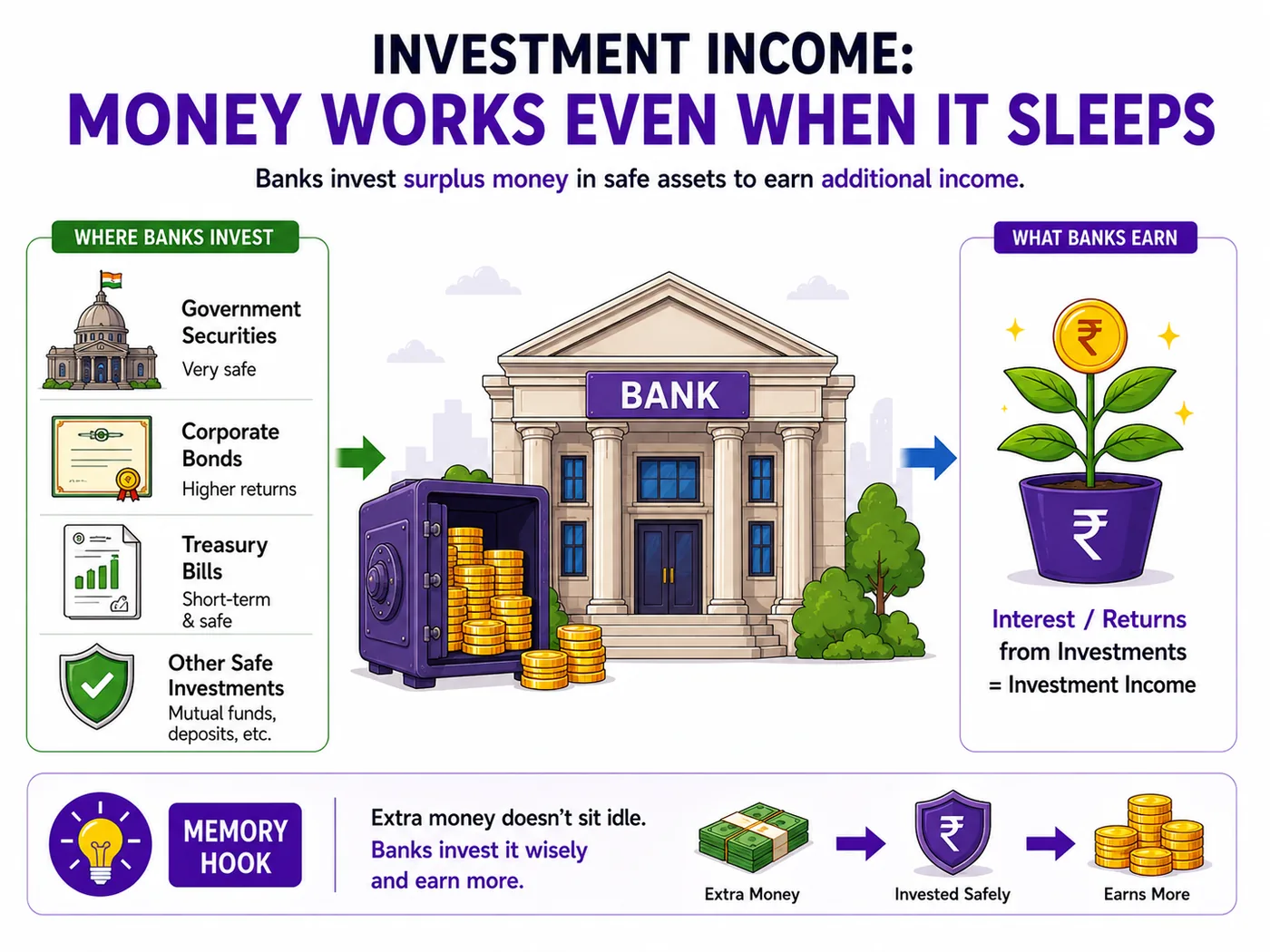
3. Loans are not the bank's only earning assets
Banks also hold securities and other financial assets. These can generate interest or coupon income and may also create gains or losses when market values change.
The treasury function manages areas such as liquidity, funding, interest-rate exposure, foreign exchange and parts of the bank's investment portfolio.
4. Why revenue is not profit
A bank can earn large amounts of interest and fees and still perform poorly if its costs or losses are too high.
It pays for funding, employees, technology, compliance, branches and operations. Some borrowers will also fail to repay. Banks therefore recognise credit losses and provisions for expected losses.
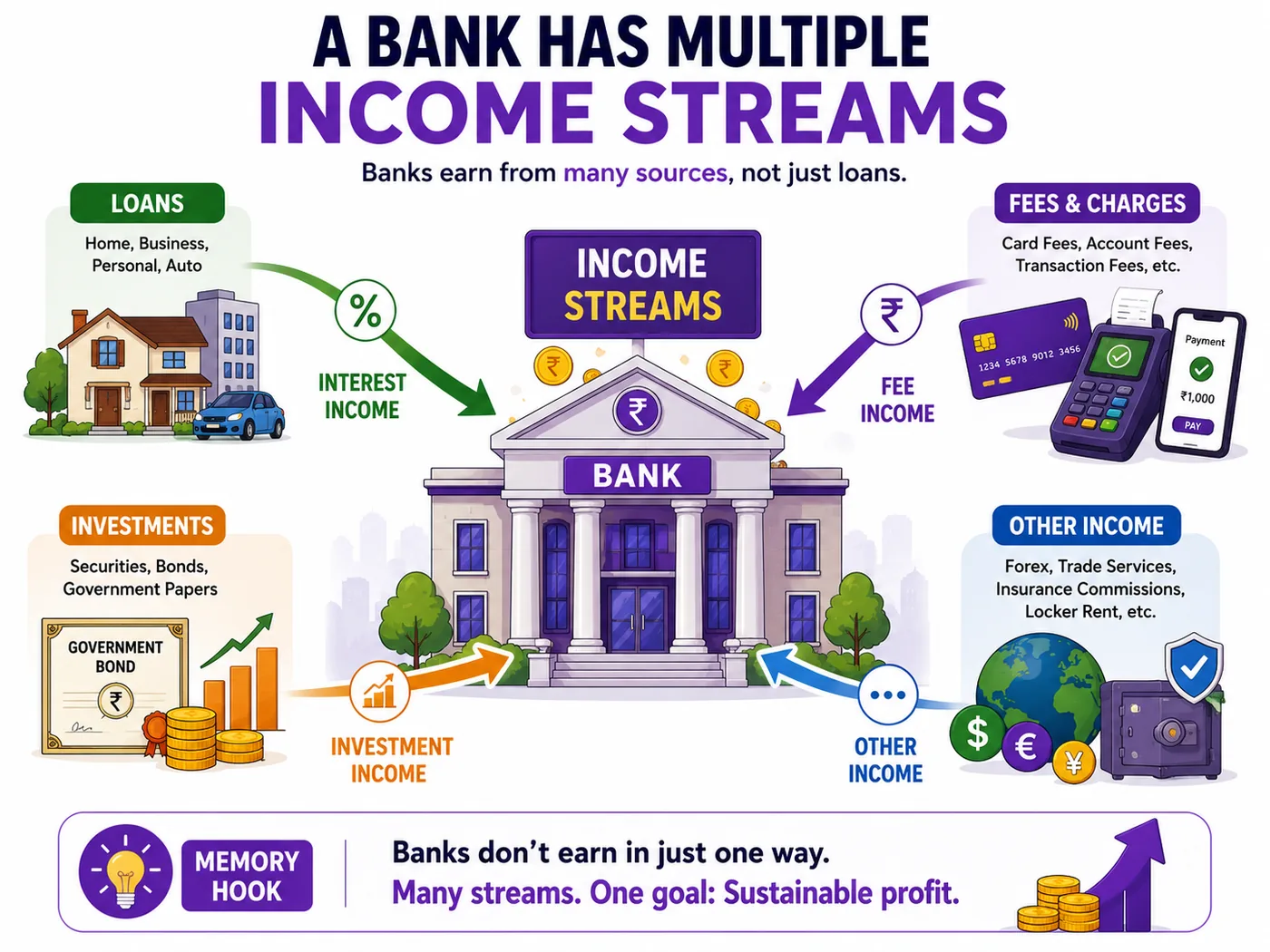
Earn enough for the risk while keeping defaults manageable.
Manage funding, costs, liquidity, capital and risk: not just charge high interest.
5. Quick check
A bank earns ₹100 of interest and fees. It then pays ₹35 in funding cost, ₹25 in operating costs and records ₹20 of credit losses. Is ₹100 its profit?