
1. What does inflation mean?
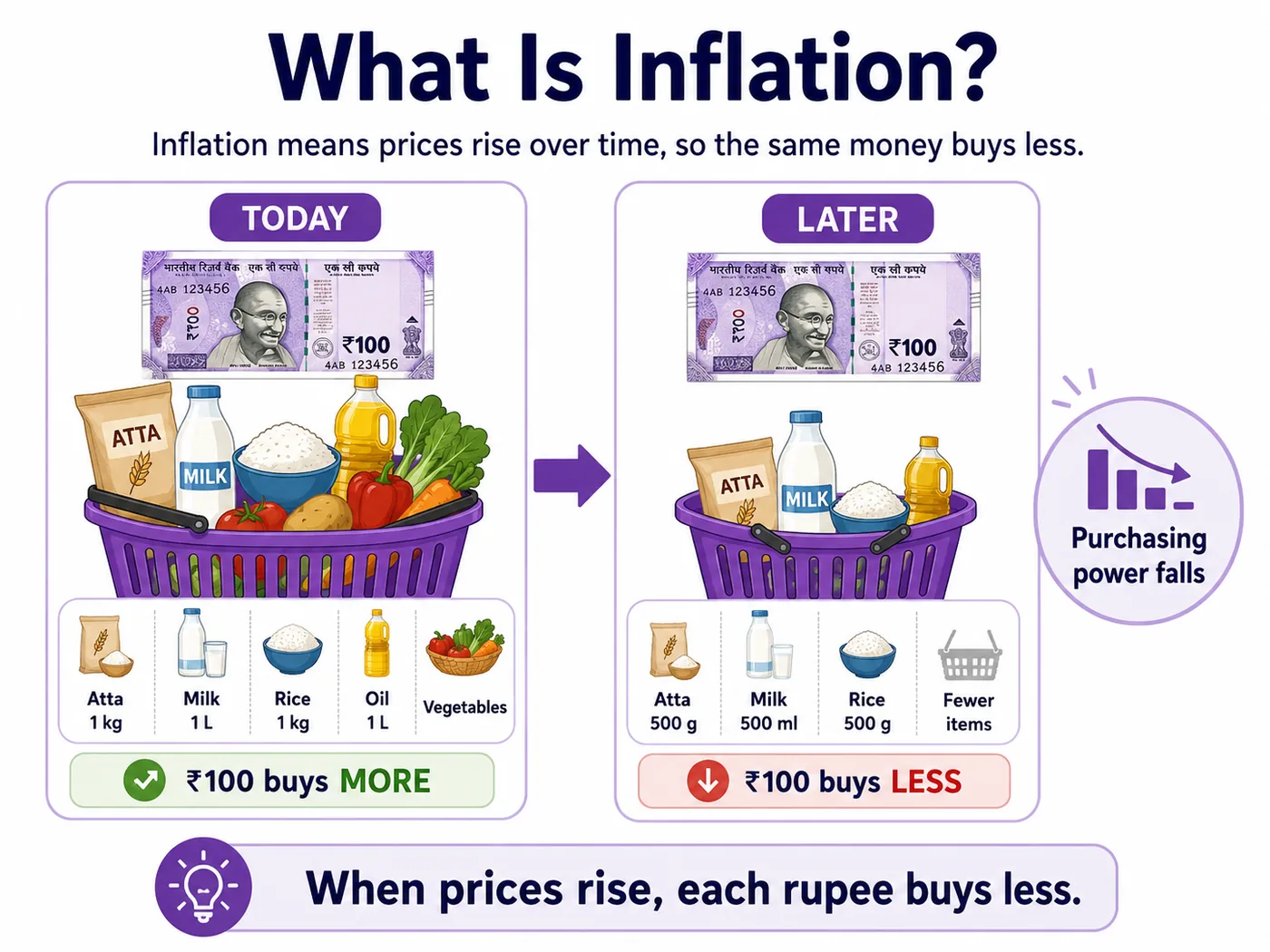
Inflation is the general rise in prices over time. When prices rise, each rupee buys fewer goods and services than before. In other words, your purchasing power falls.
If ₹100 could buy more groceries before and fewer groceries later, that difference is inflation in action.
2. Why do prices rise?
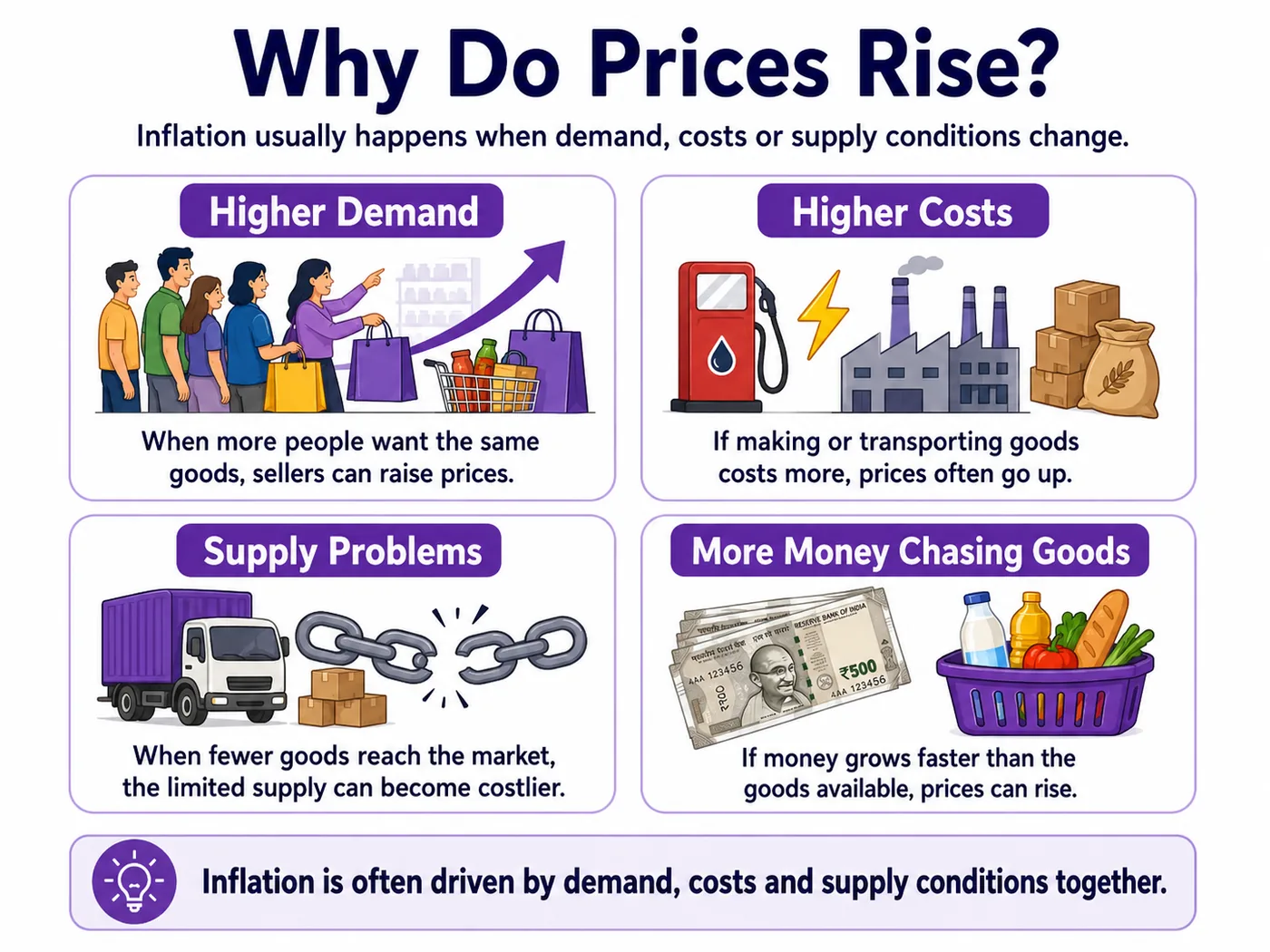
Inflation can happen for several reasons, and often more than one reason is active at the same time. Strong demand, higher production costs, supply disruptions, and more money chasing limited goods can all push prices upward.
When many people want the same goods and services, sellers can raise prices.
If fuel, transport, wages or raw materials cost more, companies often pass part of that cost to customers.
3. Why inflation matters
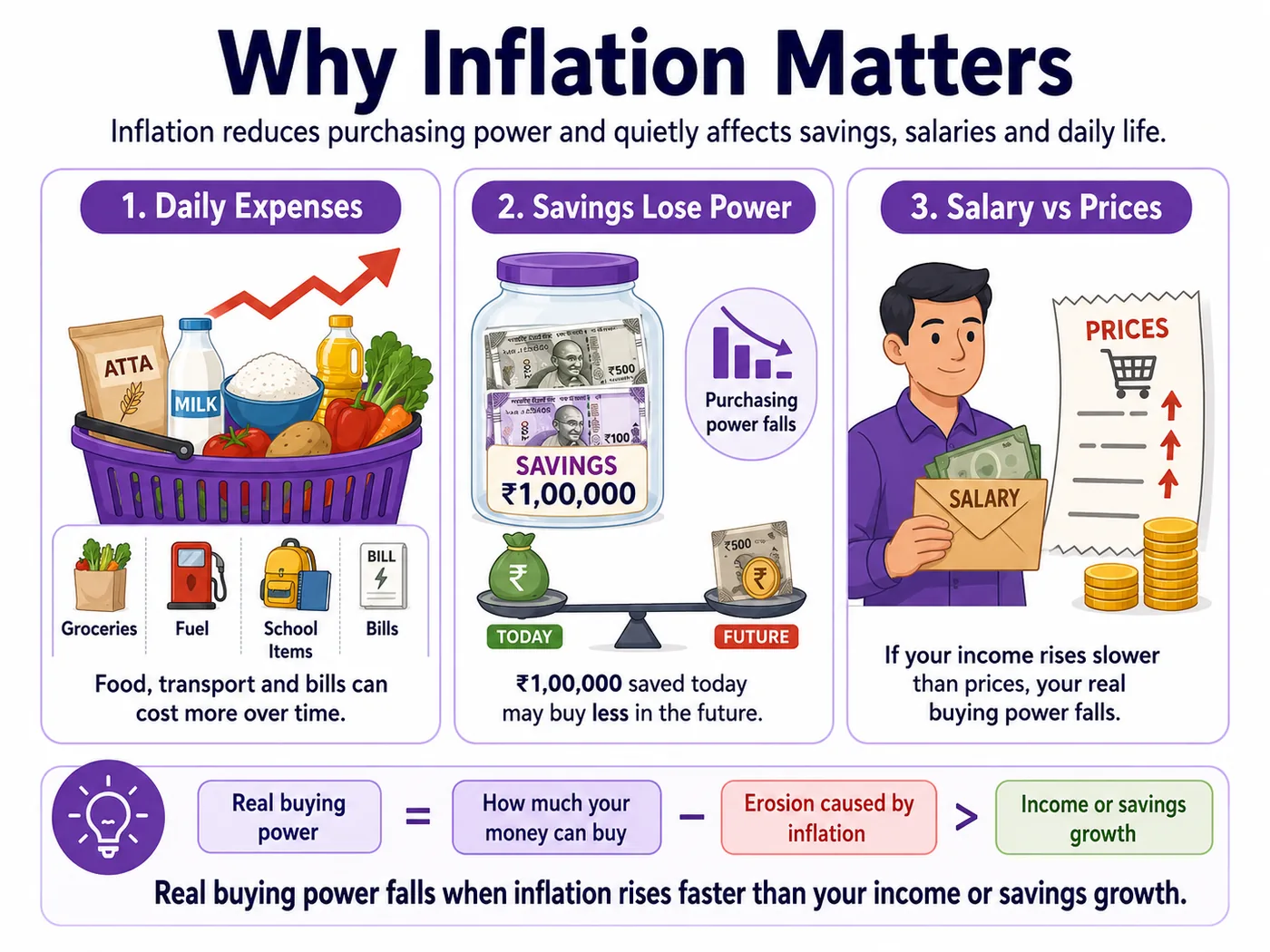
Inflation affects your daily life quietly but powerfully. Groceries, fuel, school costs and monthly bills can rise. Savings kept idle lose purchasing power. And if your salary grows more slowly than prices, your real buying power goes down even if your income number rises.
4. How should you respond to inflation?
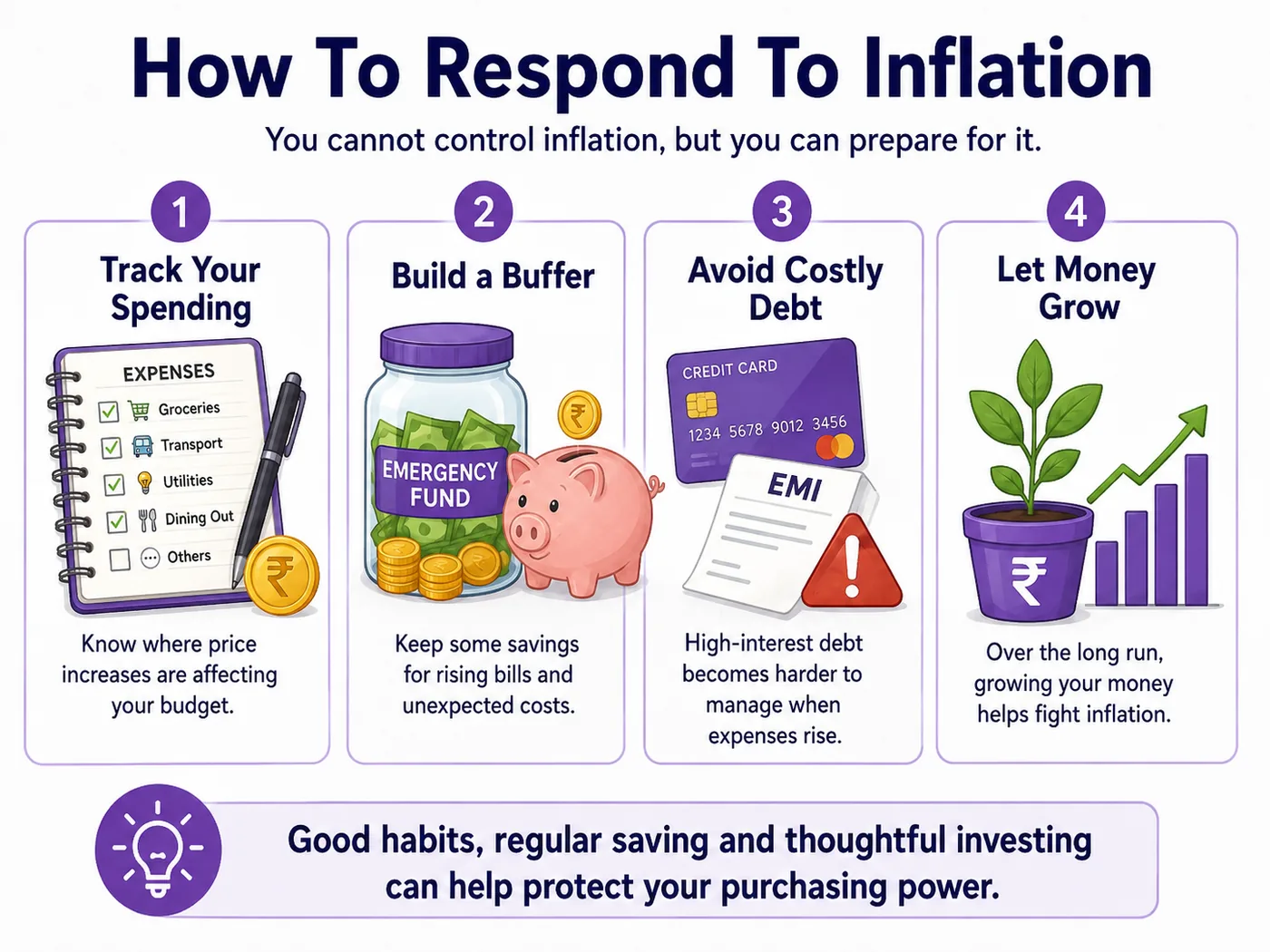
You cannot fully control inflation, but you can prepare for it. The practical response is to understand your spending, maintain a buffer, avoid costly debt, and let part of your money grow over the long term.
Convert yearly expenses like insurance or school fees into a monthly amount and set money aside throughout the year.
Regular saving, improving income over time, and thoughtful long-term investing can help you stay ahead of rising prices.
5. Quick check
If ₹100 used to buy 1 litre of oil and later it buys only 800 ml, what has happened?