
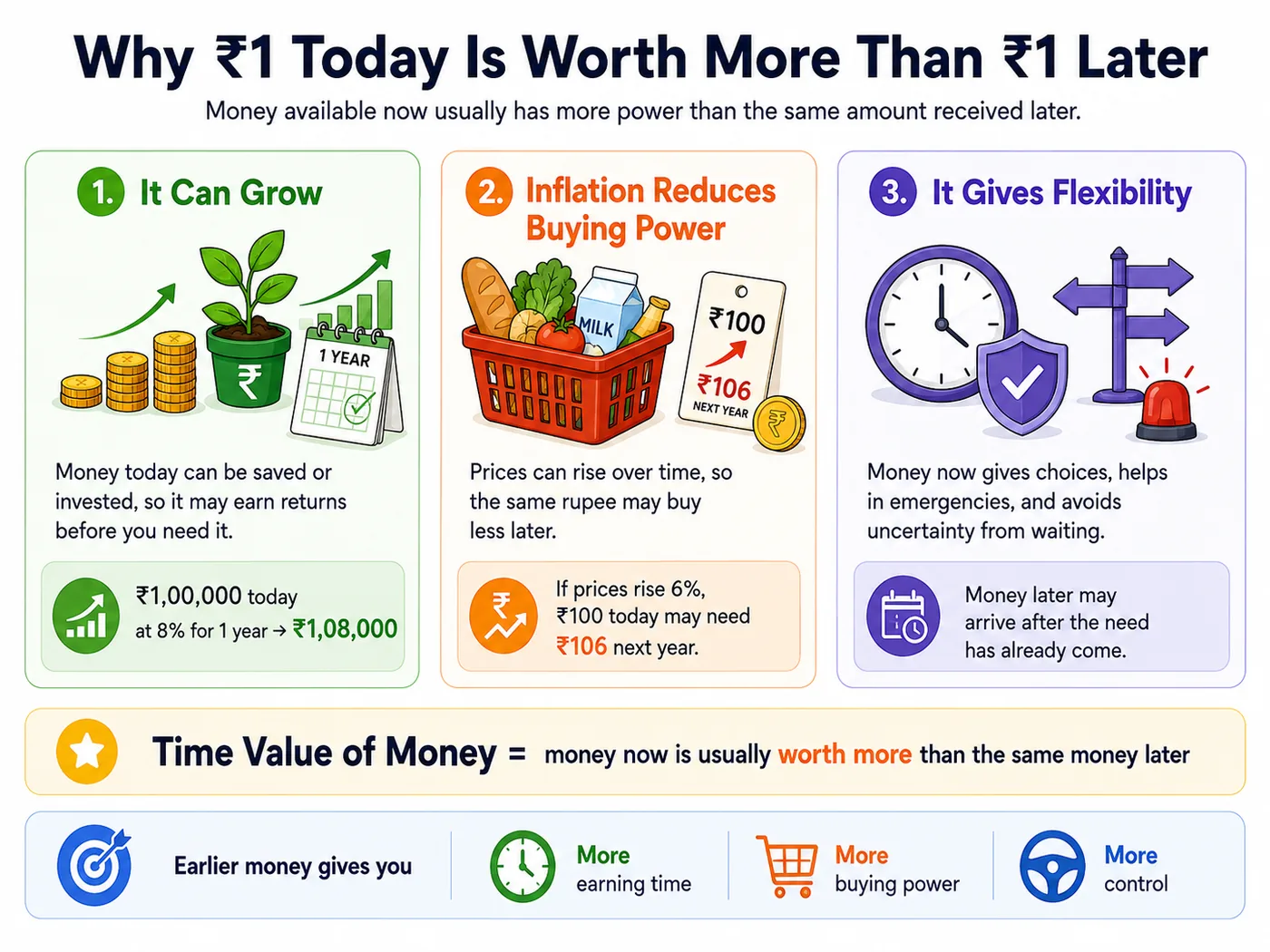
1. Why is money today worth more?
₹1 today and ₹1 received years later are not economically identical. Money available today can be saved or invested, prices may rise while you wait, and having money sooner gives you more flexibility.
This idea is called the time value of money: money available earlier usually has greater value than the same nominal amount available later.
2. Future Value: moving money forward
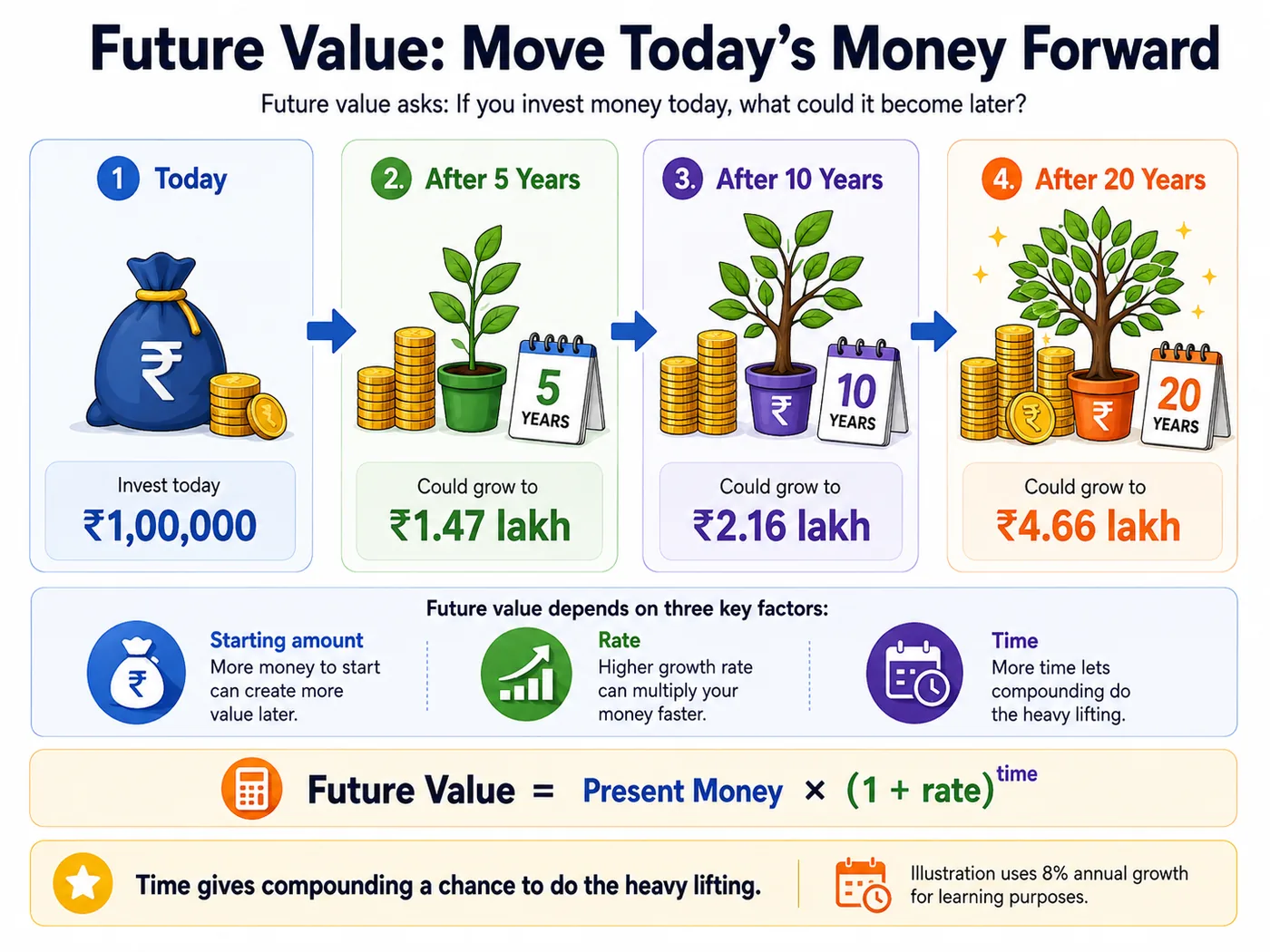
Future value answers: “If I have this money today and it grows at a certain rate, what could it become later?”
For example, ₹1 lakh growing at 8% a year becomes about ₹1.47 lakh after 5 years, ₹2.16 lakh after 10 years and ₹4.66 lakh after 20 years.
3. Present Value: bringing future money back
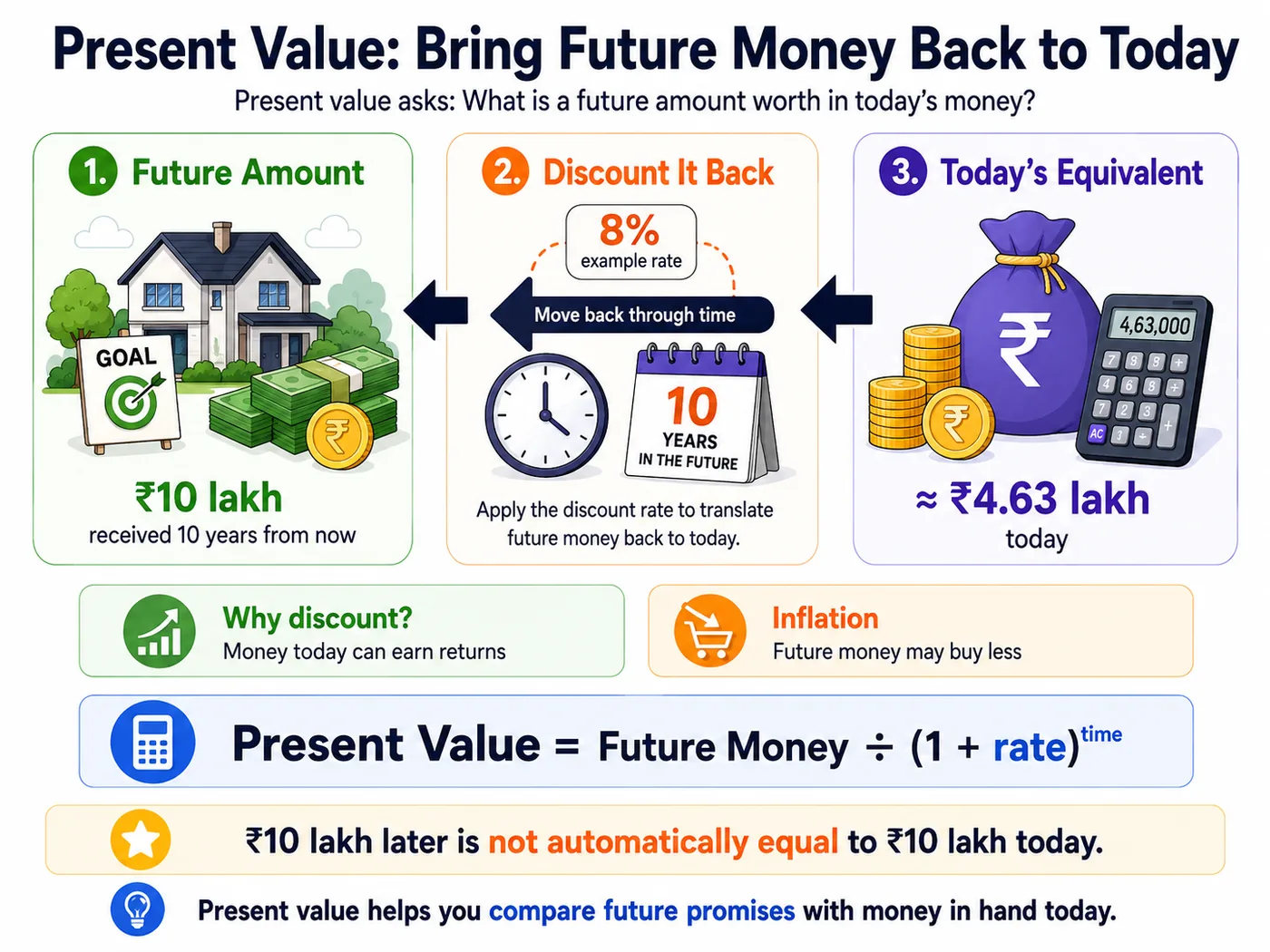
Present value works in the opposite direction. It asks: “What is a future amount worth today?”
If you expect ₹10 lakh ten years from now and use an 8% discount rate, its present value is roughly ₹4.63 lakh. That does not mean ₹10 lakh disappears: it means ₹4.63 lakh today growing at 8% would become about ₹10 lakh in ten years.
Move today's money forward through time.
Translate future money back into today's equivalent.
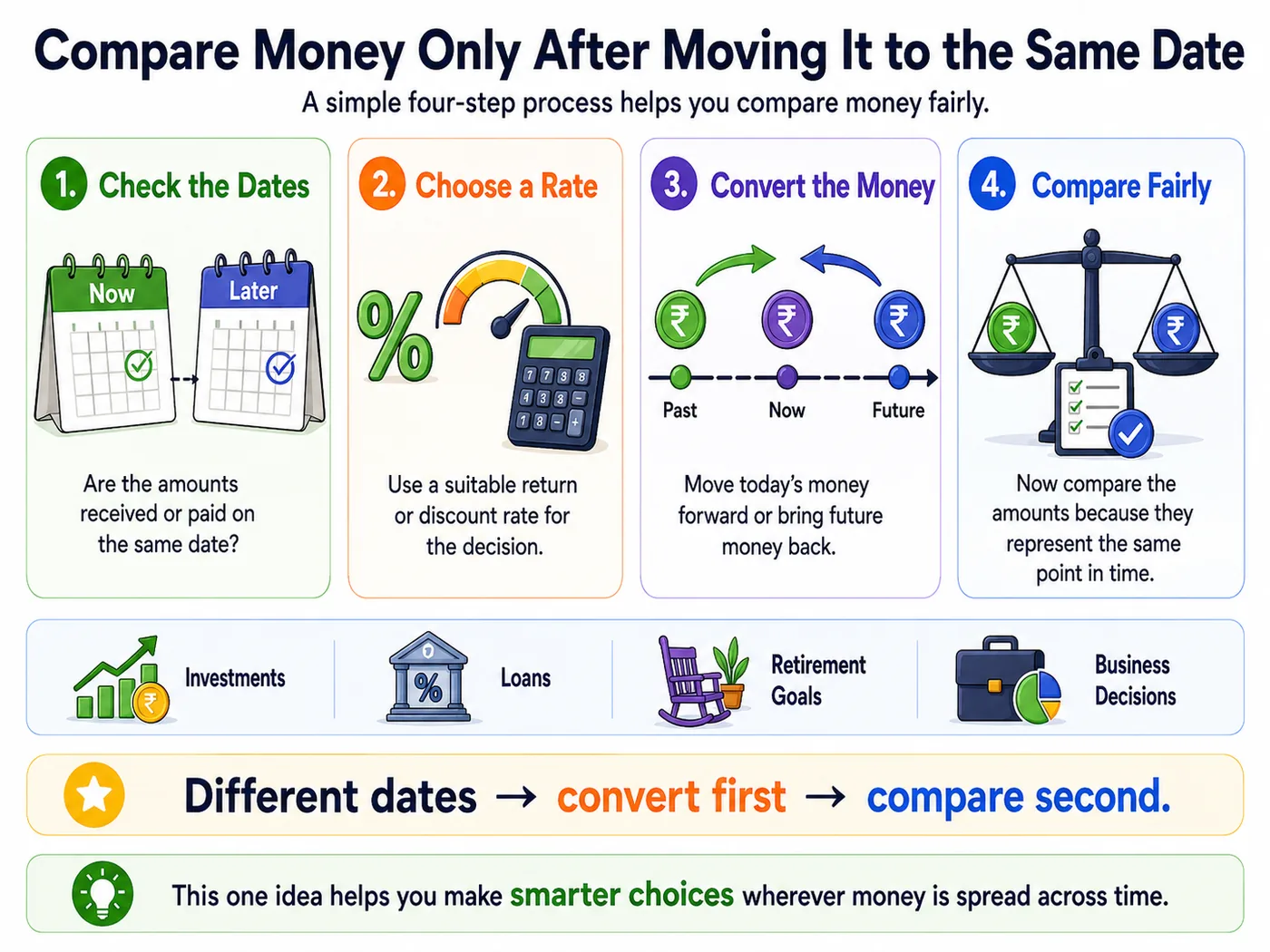
4. How to compare money at different dates
Never compare two rupee amounts from different dates as though they are directly equivalent. First move them to the same point in time using a suitable growth or discount rate.
This principle appears in investment decisions, retirement planning, loans, business projects, cash discounts and even choices such as receiving a lump sum today versus a larger amount later.
5. Quick check
You can receive ₹1 lakh today or ₹1 lakh exactly five years from now. Ignoring taxes and special circumstances, which is generally more valuable?