
1. Why are there different kinds of banks?
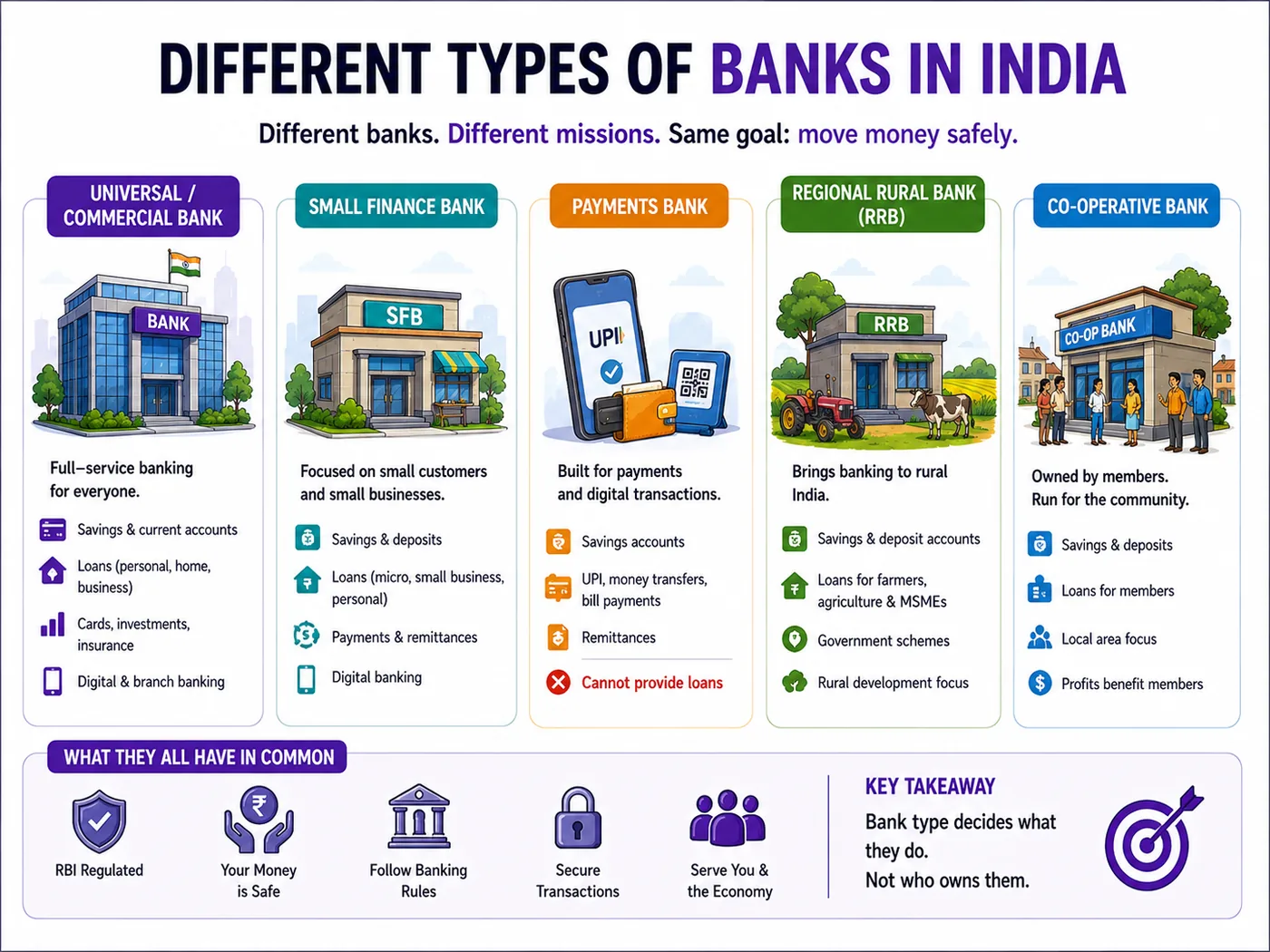
India does not have one single bank model. Some banks are designed to offer broad, full-service banking. Others were created with a narrower purpose such as financial inclusion, payments, rural credit or community banking.
A practical beginner map includes universal/commercial banks, Small Finance Banks, Payments Banks, Regional Rural Banks and co-operative banks.
2. What can each bank type actually do?
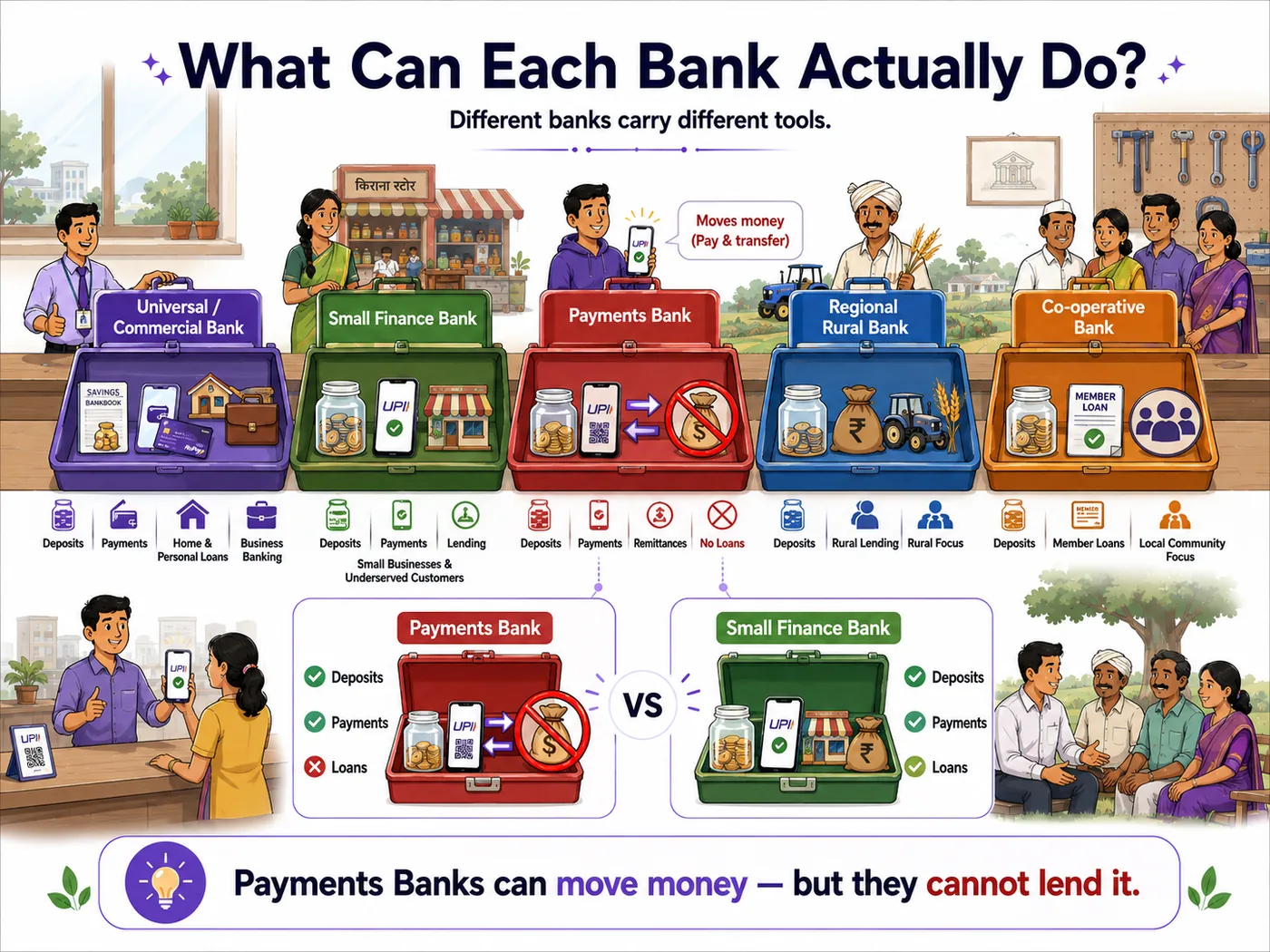
Universal or commercial banks generally provide the broadest mix of deposits, payments, loans and other banking services.
Small Finance Banks also accept deposits and lend, but their regulatory design has a strong financial-inclusion focus. Payments Banks are different: they can provide deposit and payment/remittance services, but RBI rules do not permit them to undertake lending activities.
Regional Rural Banks were created to support the rural economy and rural credit. Co-operative banks operate using a co-operative ownership structure and can serve local or member communities.
3. Public, private and foreign banks are ownership labels
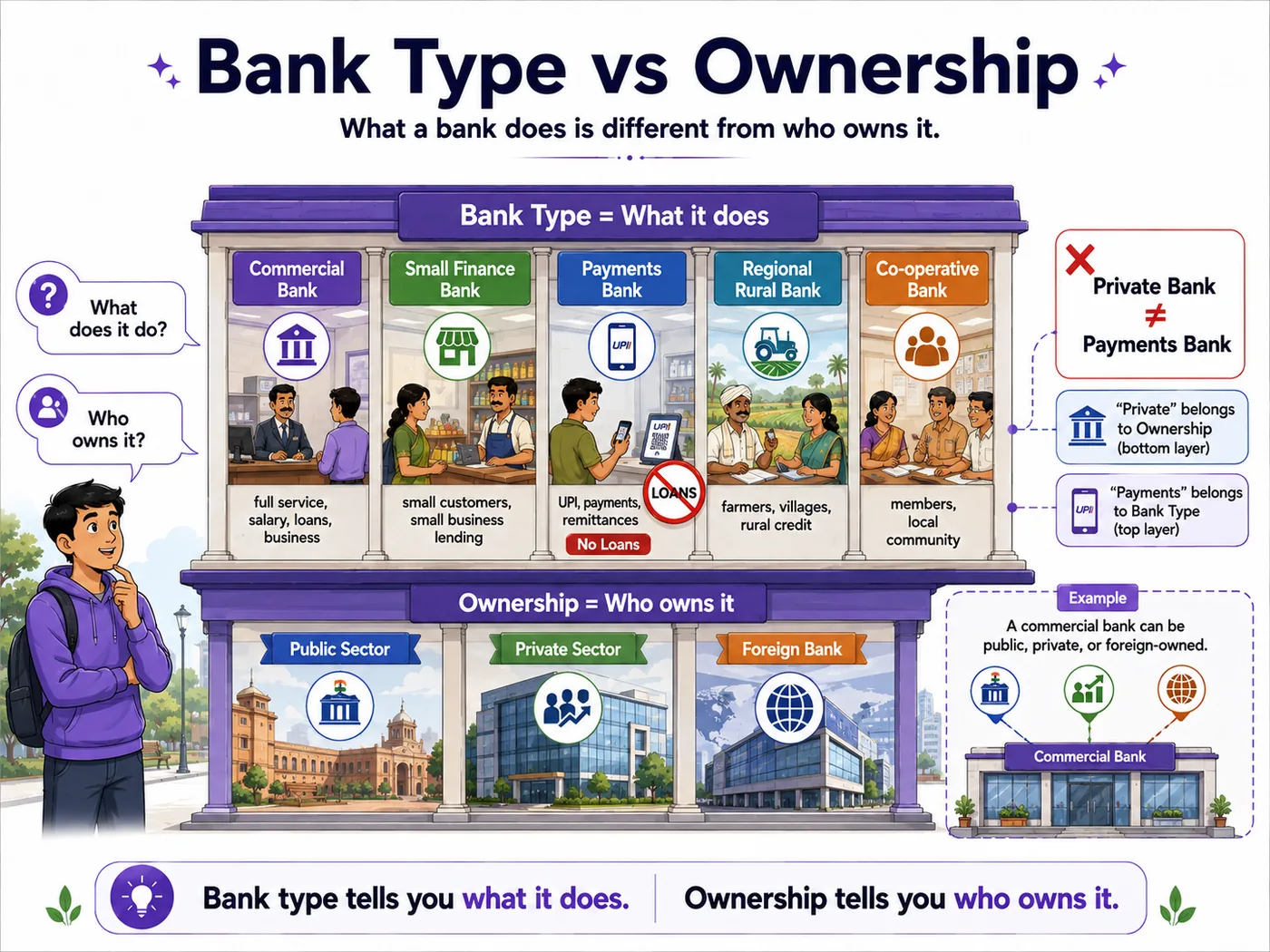
When people say “public sector bank” or “private sector bank,” they are usually describing ownership, not a separate set of basic banking functions.
Public sector, private sector and foreign banks can all sit inside the broad commercial-banking world. That is different from a label such as Payments Bank, which describes a differentiated banking model with different permitted activities.
4. Which bank type should you choose?
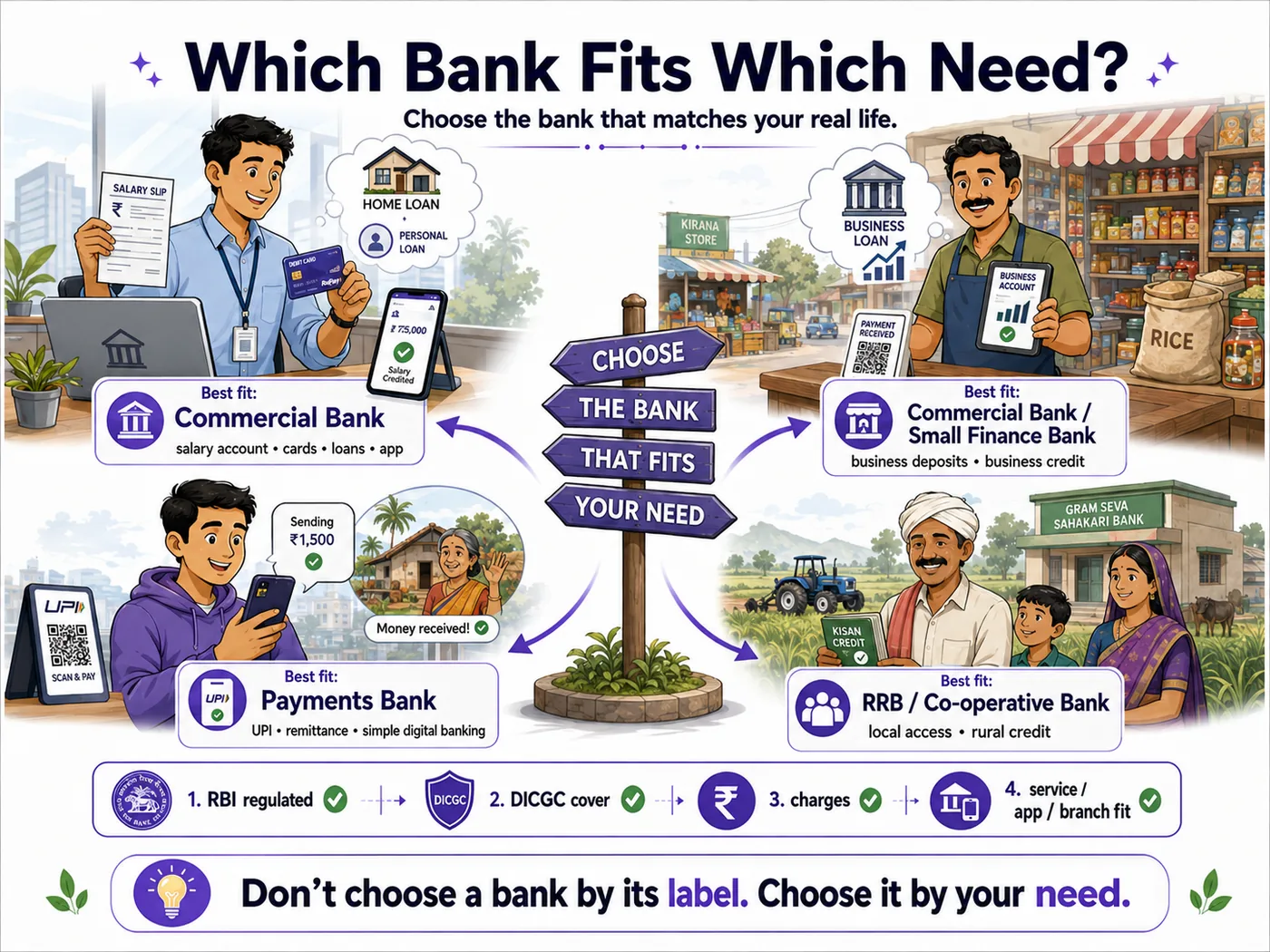
Do not choose only from the label. Start from your need. For a salary account and broad day-to-day banking, a full-service commercial bank is often the natural fit. Small Finance Banks may be useful when their product, rate or service fits you. Payments Banks can be useful for payment-focused needs but cannot provide loans themselves.
RRBs and co-operative banks can play important roles in rural, agricultural, local and community banking.
For deposits, also understand deposit insurance. Deposits in DICGC-insured banks are insured up to ₹5 lakh per depositor per bank, including principal and interest, when held in the same right and same capacity.
5. Quick check
Which statement is correct?