
1. What is compounding?
Compounding happens when a return remains invested. The next return is earned on both your original money and the gains already added.
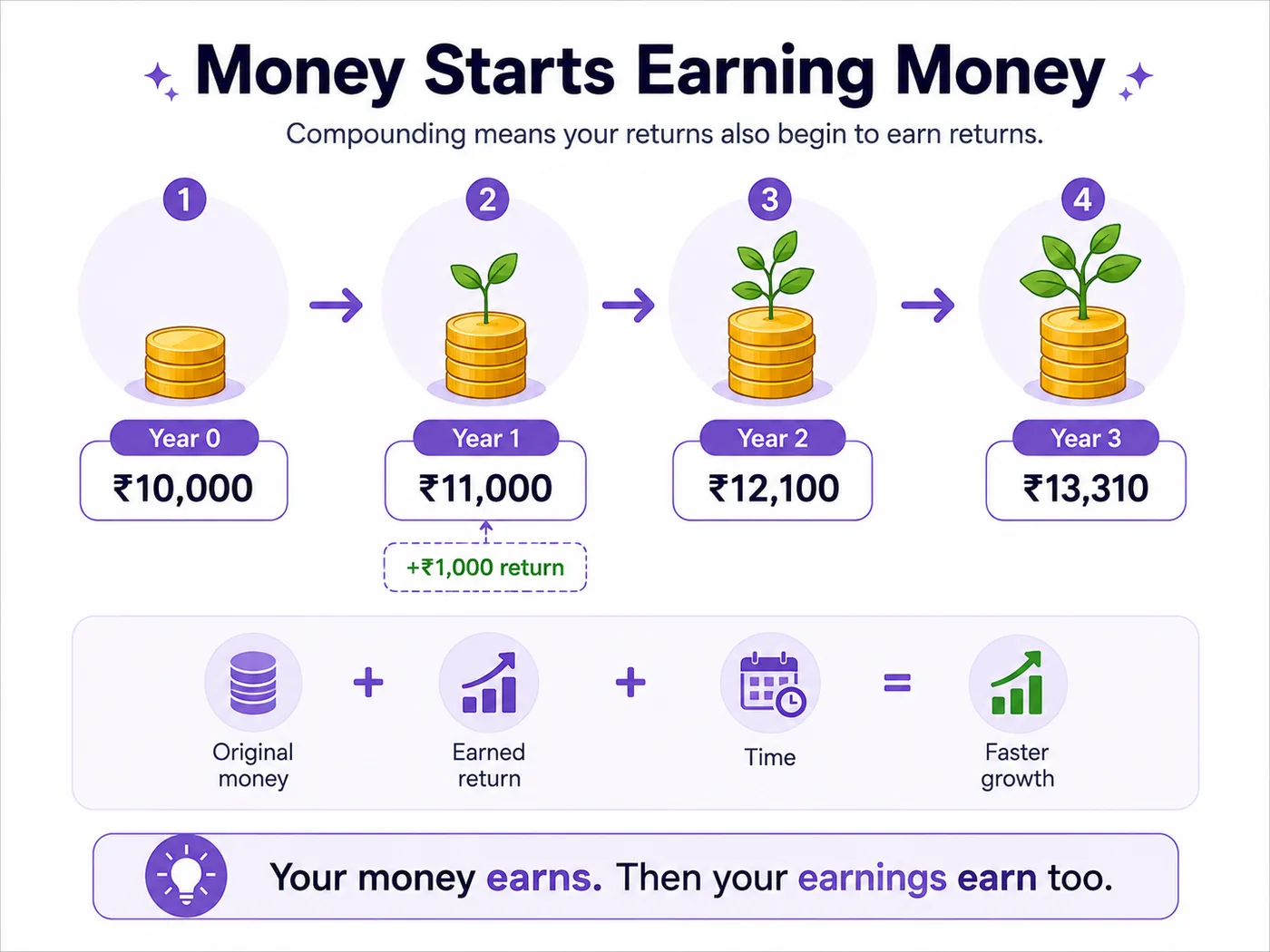
Memory hook: Compounding means gains can start earning gains.
2. Why starting early matters
Starting earlier gives contributions more years to compound. That extra time can create a meaningful gap.
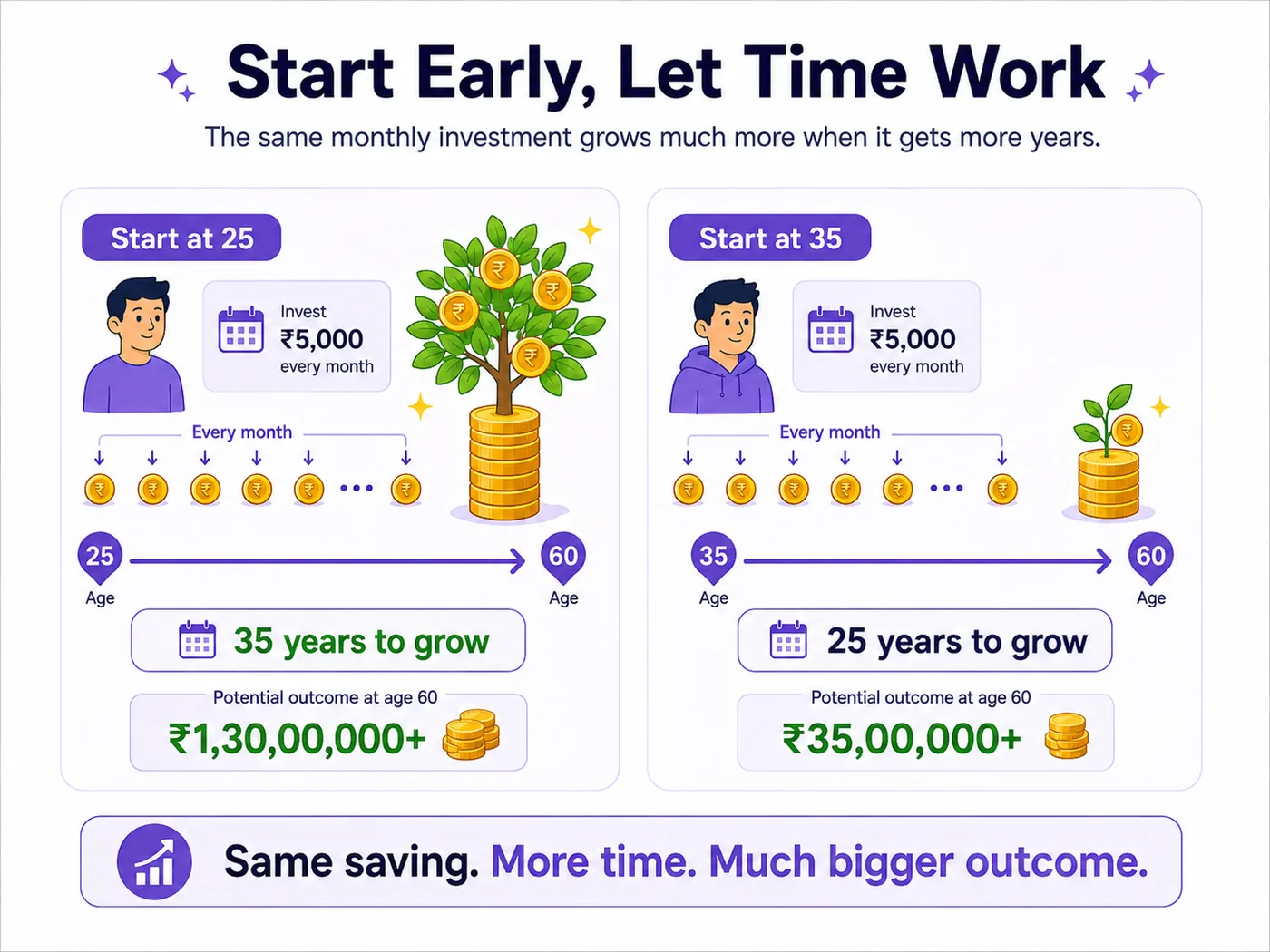
Illustration only: Returns fluctuate and are never guaranteed.
3. Why growth accelerates
Compounding can feel slow at first. Later, the same percentage return is applied to a larger base, so rupee gains become larger.
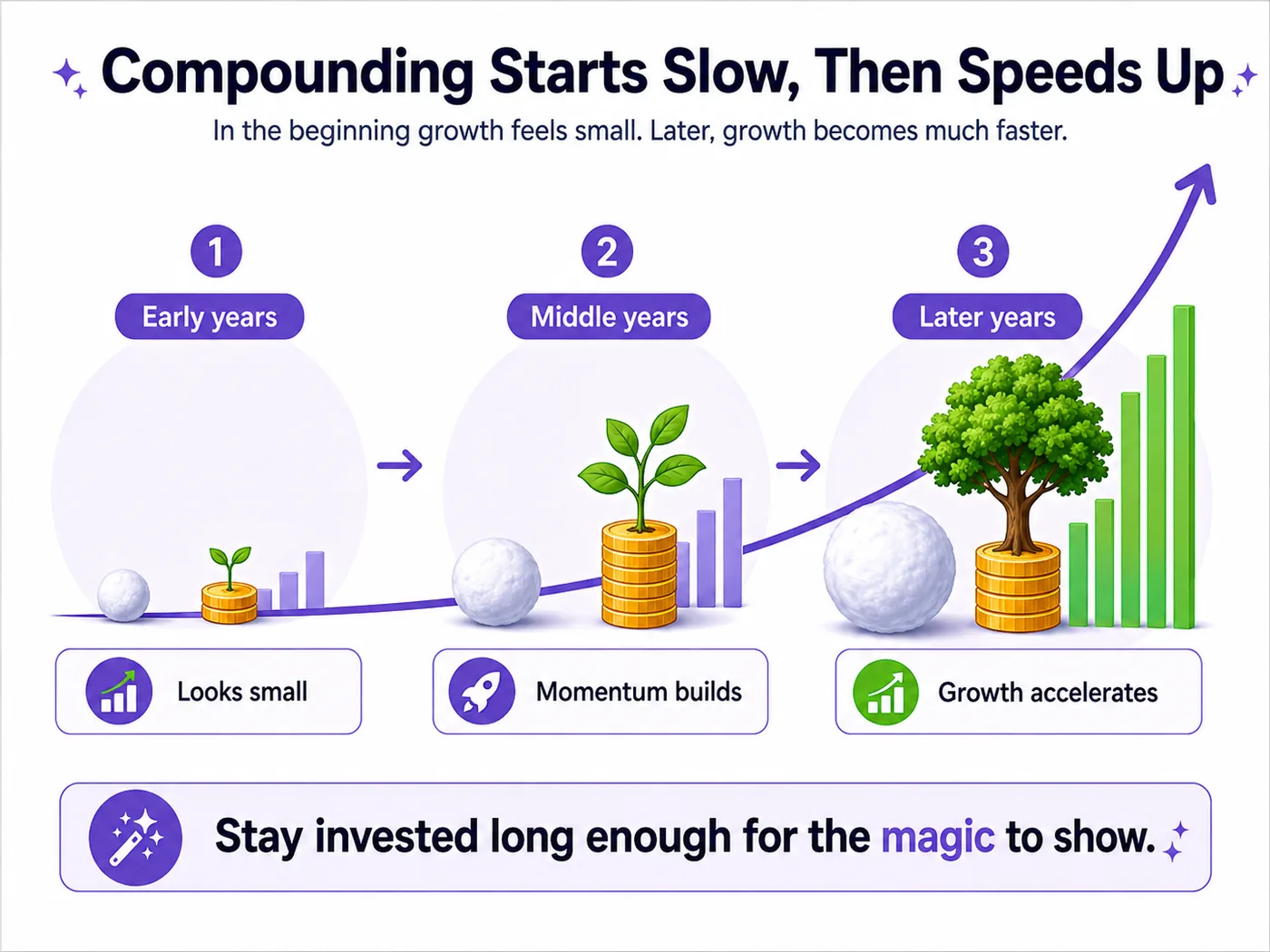
Early years: your contributions do most of the work.
Later years: the accumulated portfolio can do more of the work.
4. What makes compounding work well?
Time, consistency, sustainable returns and avoiding unnecessary interruptions create good conditions for compounding.
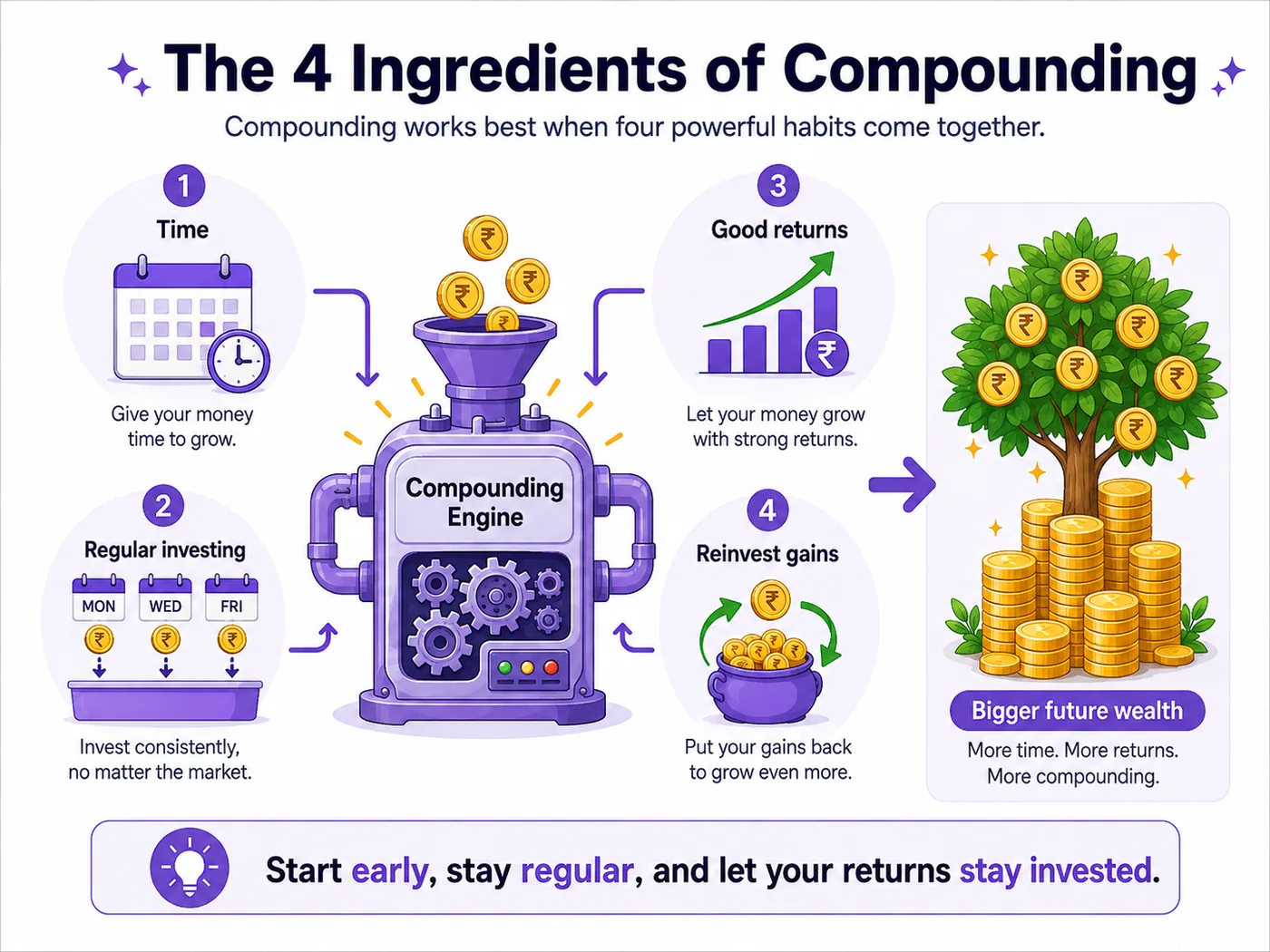
Stay realistic: a sustainable plan you can maintain is more useful than chasing magical returns.
5. Quick check
₹100 earns 10% and becomes ₹110. If ₹110 earns another 10%, what does it become?
A. ₹120
B. ₹121
C. ₹110
D. ₹130
Answer: B. Ten percent of ₹110 is ₹11, so the total is ₹121.