
1. What is opportunity cost?
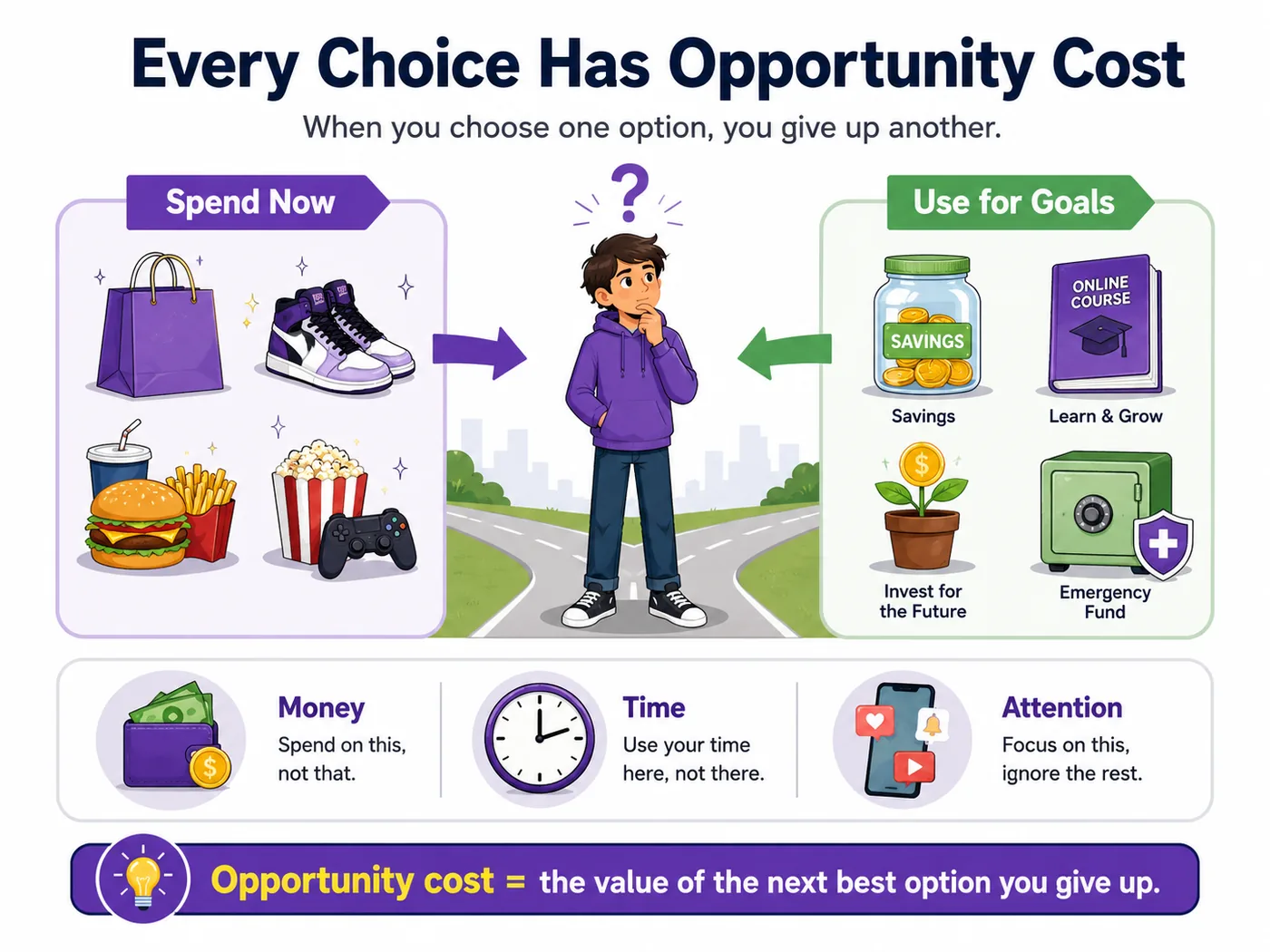
Your money, time and attention are limited. If you use ₹10,000 for one purpose, you cannot use that same ₹10,000 for another purpose at the same moment.
Opportunity cost is the value of the best alternative you give up when you make a choice.
2. Price and opportunity cost are different
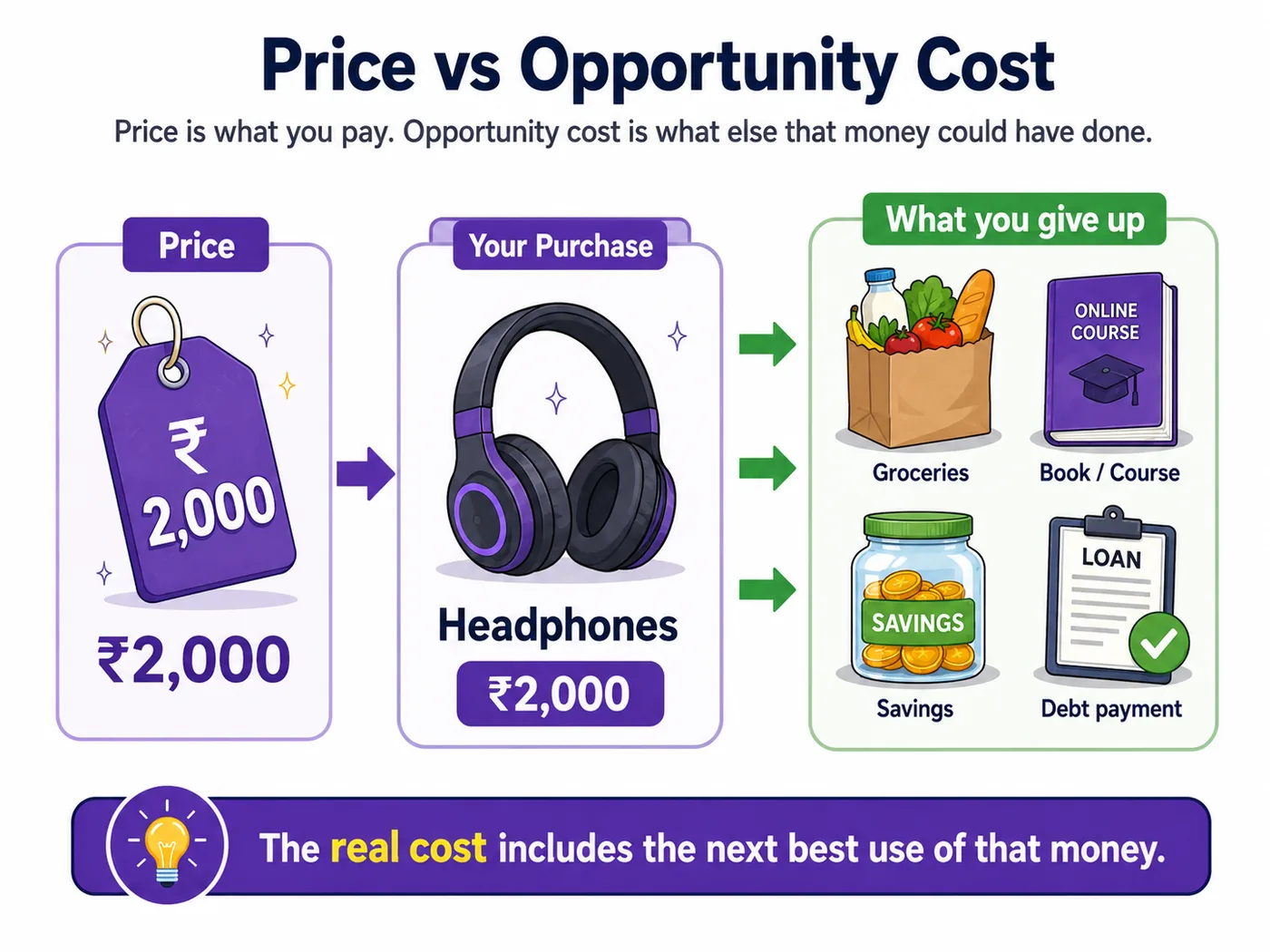
The price of something is the amount you pay for it. Opportunity cost asks a broader question: “What else could I have done with the same resources?”
For example, a ₹20,000 course costs ₹20,000. But the opportunity cost could be the value of the best alternative use of that money: perhaps reducing expensive debt, building an emergency fund, or investing: plus the time you spend taking the course.
3. Opportunity cost can grow over time
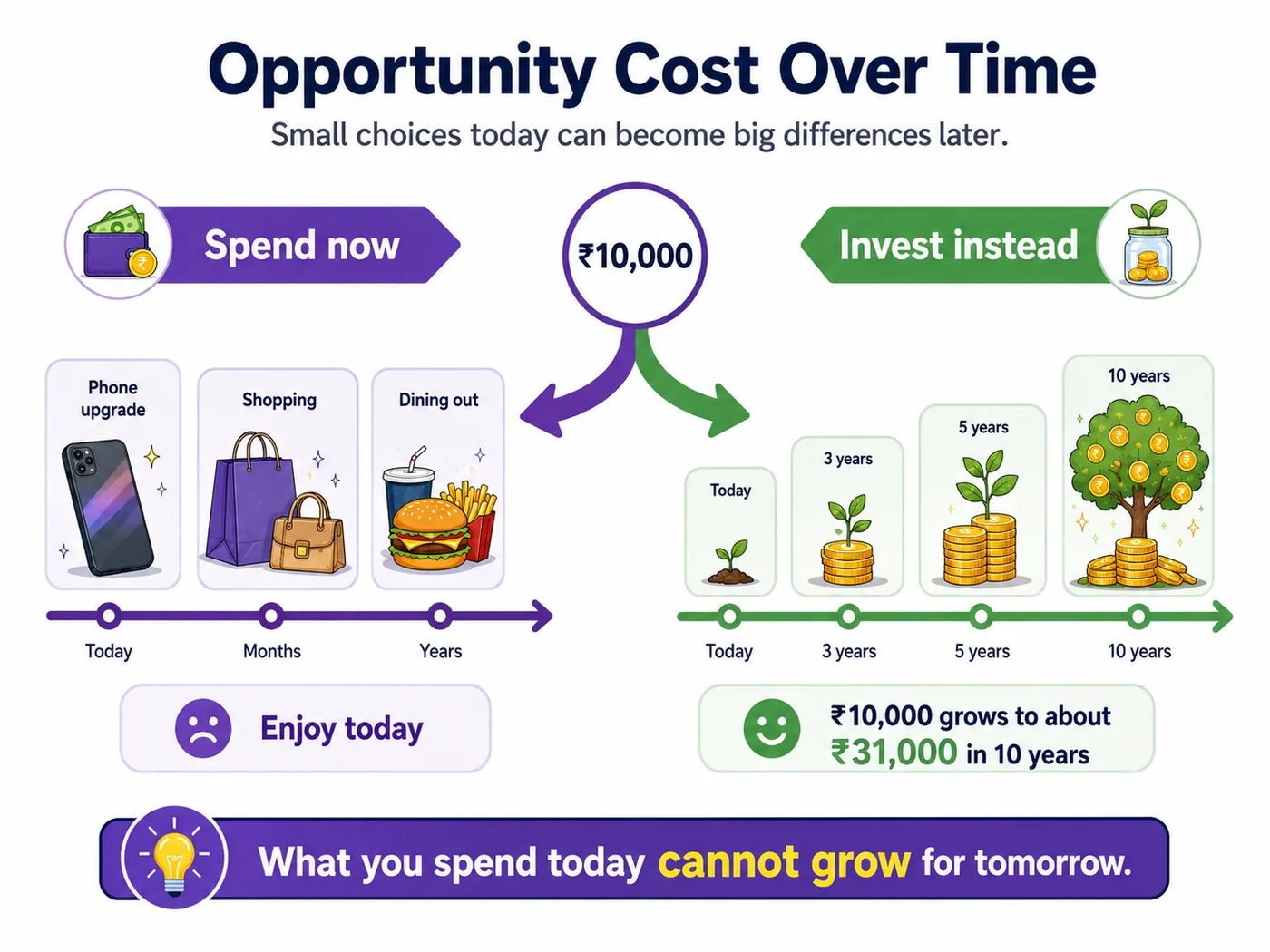
When money could have been invested, the trade-off can become larger as time passes because of compounding.
Suppose you spend ₹5,000 today. If the best alternative was investing that ₹5,000 and it happened to earn 10% a year for ten years, it could grow to roughly ₹13,000. The real decision is therefore not merely “₹5,000 spent or not spent”; it also includes the future option you gave up.
4. A simple opportunity-cost decision framework
You do not need to calculate opportunity cost for every cup of tea. Use it when the decision is meaningful: a large purchase, taking a loan, changing jobs, choosing an investment, using a bonus, or committing substantial time.
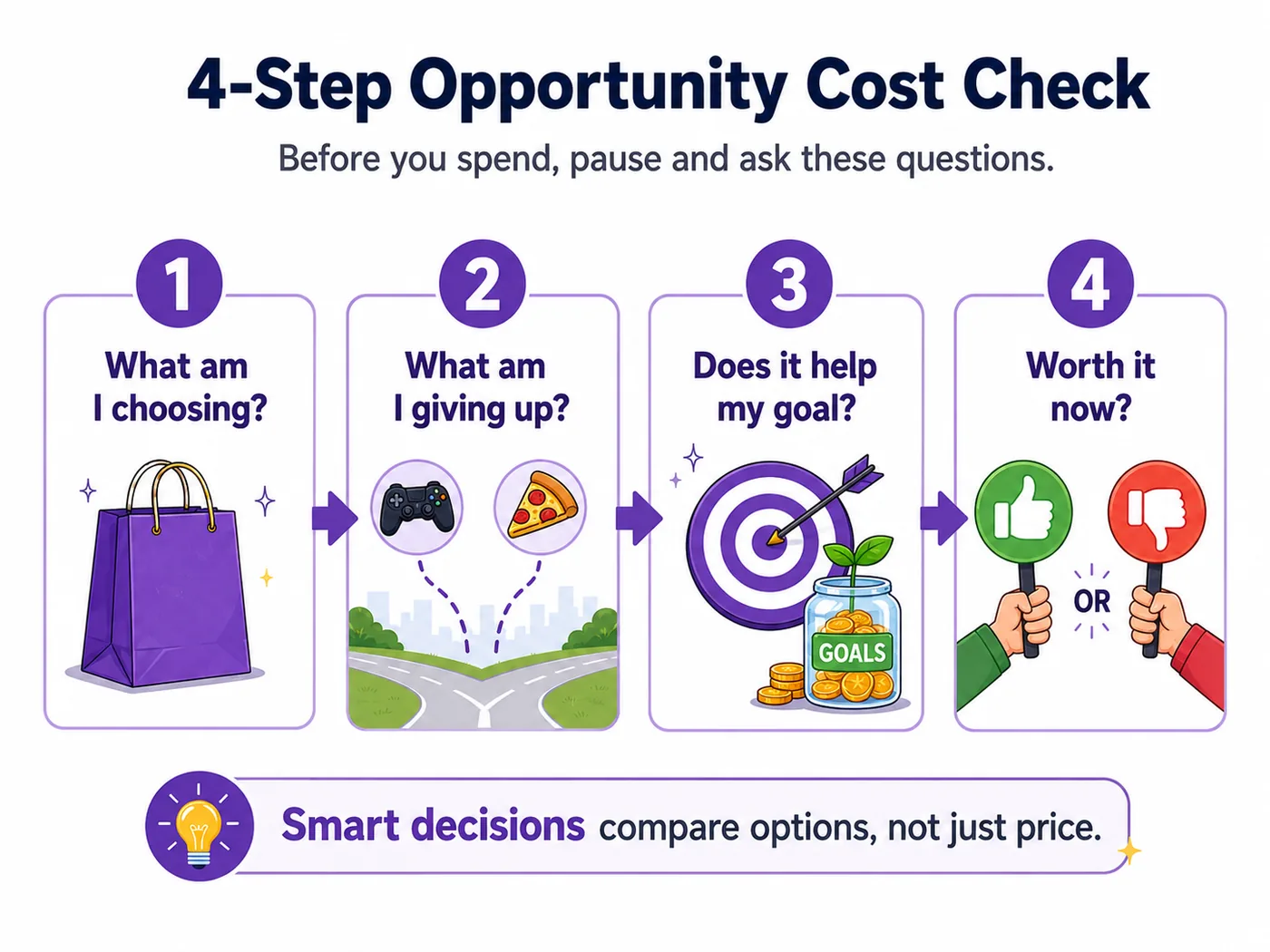
Buy a new phone now, or keep the current phone and use the money toward an emergency fund.
Work extra hours for more income, or use that time to learn a skill, rest, or be with family.
5. Quick check
You have ₹50,000. Your two best options are a holiday or repaying a high-interest credit-card balance. You choose the holiday. What is the opportunity cost?